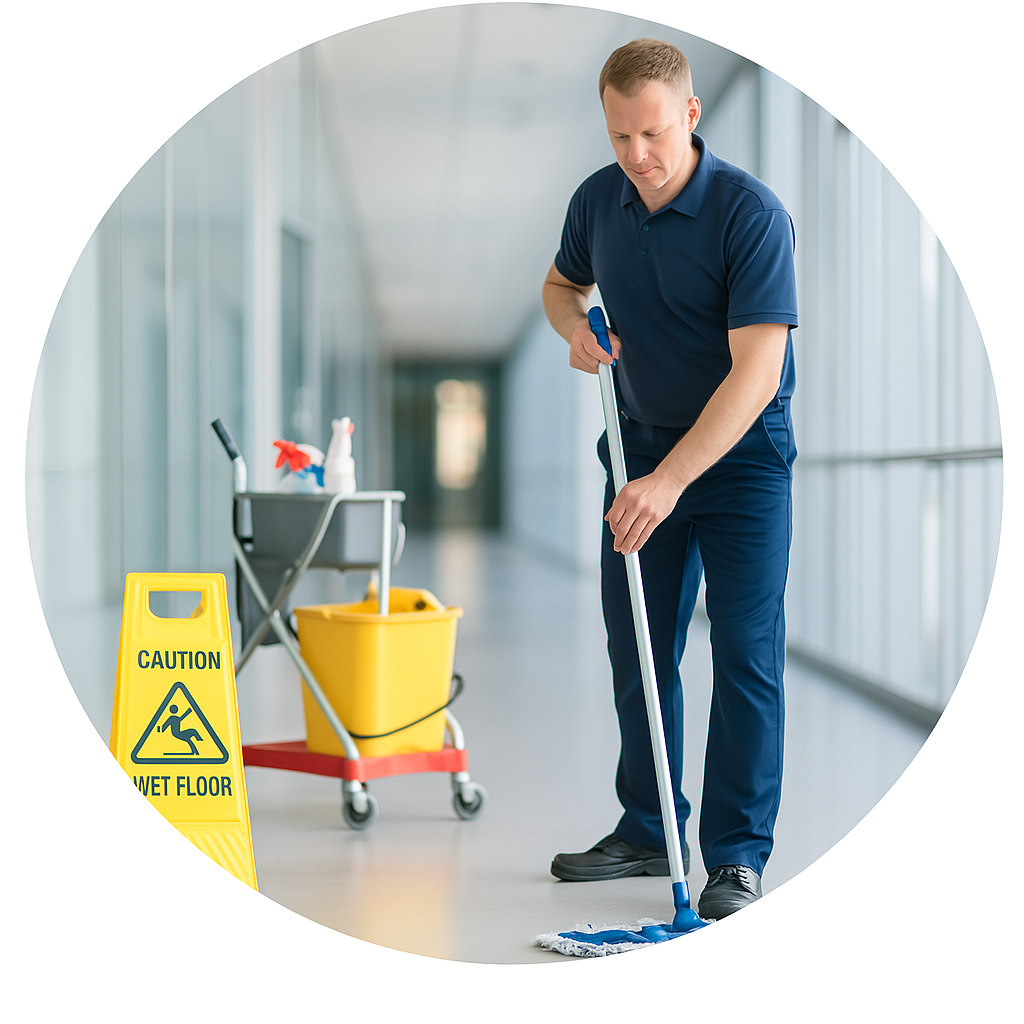
Most business owners in Bangor assume “nightly cleaning” means someone shows up, vacuums the carpet, and takes out the trash. If that’s what you’re currently getting, you’re not getting a real clean — you’re getting a visual once-over.
A proper nightly office cleaning checklist goes a lot deeper than surface tidying. It’s the backbone of a healthy, professional workspace, and most providers in central Maine won’t tell you what’s actually on it. At Clean Scene, we don’t hide behind vague promises. Here’s the actual list we use — the standard we hold our crews to, and what every Bangor business should be getting.
The Real Breakdown: A Zone-by-Zone Approach
You can’t clean an office with a scattergun approach. You have to work the space in zones. Here’s what a full evening looks like when our crew comes through.
Entryways and Reception
This is your first impression — and by 5:00 PM, it’s usually a disaster zone.
* Doormats: Vacuumed and shaken out to clear salt, slush, and tracked-in debris.
* Glass Surfaces: Fingerprints wiped from doors and push plates; checked for streaks.
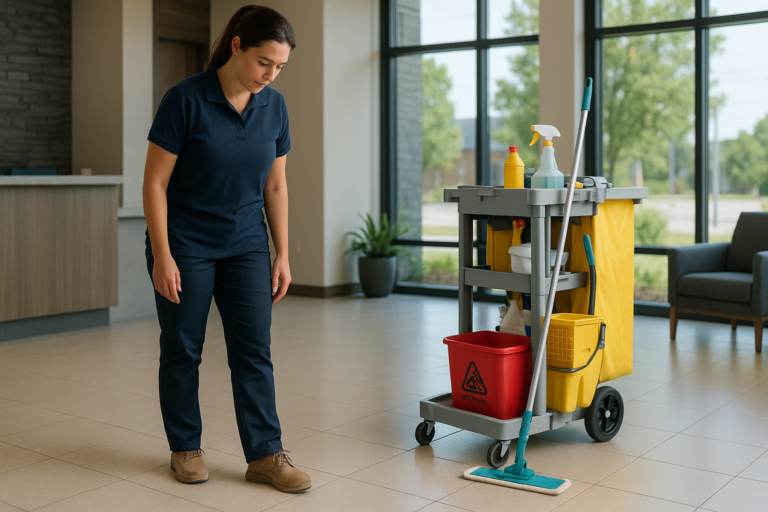
* Floors: Swept and mopped with a neutral cleaner to cut road grime.
* Dusting: Reception desk, mail area, and all horizontal surfaces wiped down.
Workstations and Common Desks
We work around personal items rather than relocating them.
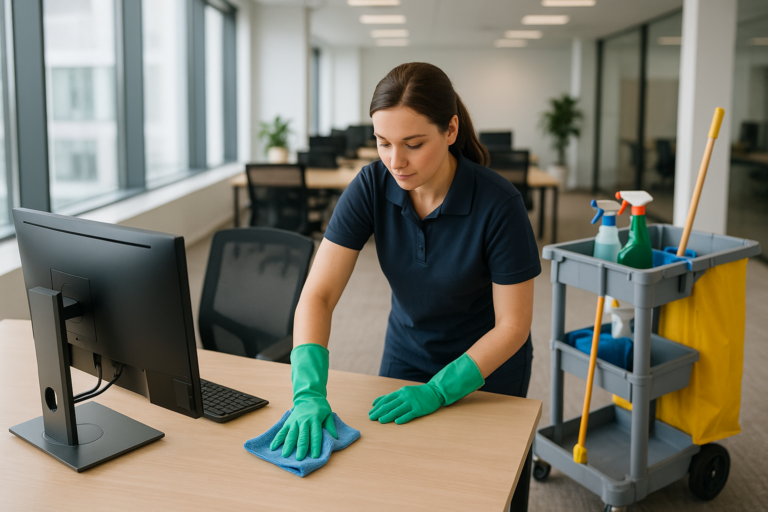
* High-Touch Points: Keyboards, phones, mice, and light switches disinfected. Every night. These are among the highest germ-contact surfaces in any shared office.
* Surfaces: Desks wiped down, dust and debris removed.
* Trash: Liners replaced; bins wiped inside and out if needed.
* Floor Perimeter: Edges swept or vacuumed — baseboards trap dust that builds up fast.
Breakrooms and Kitchens
Often the dirtiest room in the building, and the one that takes the most abuse.
* Appliances: Microwave interiors scrubbed; refrigerator exteriors wiped down.
* Countertops: Cleared of crumbs, wiped, and sanitized.
* Sinks: Scrubbed, disinfected, faucets polished.
* Floors: Swept and mopped with a degreaser to handle food spills and sticky spots.
Restrooms
This is where your reputation lives or dies. There’s no room for “good enough” here.
* Sanitization: Toilets, urinals, and sinks scrubbed and disinfected.
* Restocking: Soap, toilet paper, and paper towels refilled.
* Fixtures: Mirrors cleaned; faucets descaled and polished.
* Floors: Mopped thoroughly — corners and under-sink areas included.
Conference Rooms
These spaces look fine after a meeting. They usually aren’t.
* Tables: Wiped with the right cleaner for the material — wood versus laminate.
* Chairs: Wiped down, armrests and backs included.
* Electronics: Screens and remotes disinfected — easily the most-touched surfaces in the room.
* Trash: Waste removed and liners replaced.
Floors: Hard Surface and Carpet
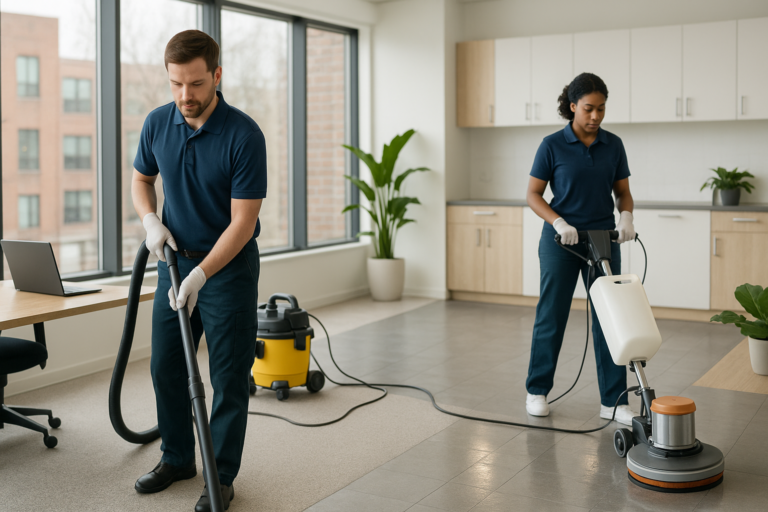
- Hard Floors: Damp mopped with a finish-safe cleaner — lifts dirt without stripping wax.
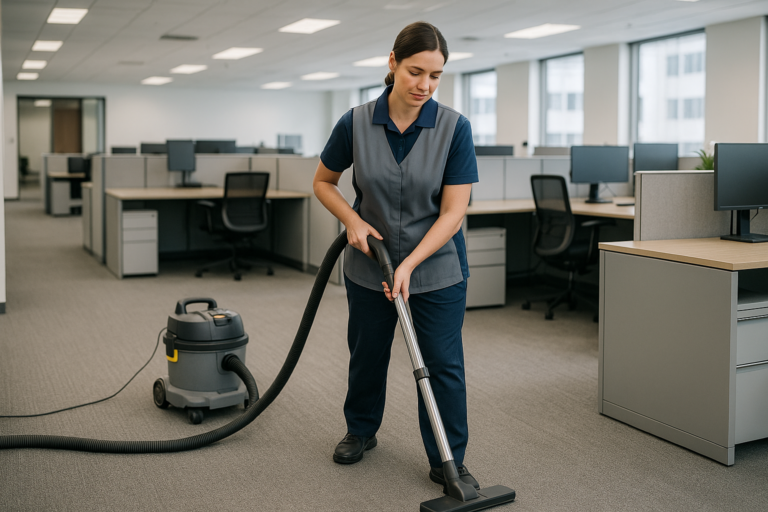
- Carpet: High-traffic lanes vacuumed slowly to pull out embedded soil; visible stains spot-treated.
- Baseboards: Vacuumed with a brush attachment to clear the dust line that builds over time.
The “Invisible” Details Budget Cleaners Skip
If you’ve watched your cleaning crew spend 15 minutes in the breakroom and wondered what they actually did in there — you’re not imagining it. Cut-rate services run on thin margins, and the first thing to go is time on task.
When corners get cut, it’s never the obvious stuff. They won’t tell you they skipped the baseboards. They won’t mention they used the same rag on the desk and the breakroom table.
Here’s what usually disappears when price is the only metric:
* High-Touch Surfaces: Budget crews wipe desks but skip light switches and door handles — the spots where germs actually travel.
* Under the Furniture: Dust under desks and behind chairs piles up. If it’s out of sight, a rushed crew leaves it there.
* Drain Deodorizing: A smelly breakroom sink means buildup in the P-trap. Budget crews wipe the rim; they don’t treat the drain.
* Baseboards and Vents: These take time and fresh cloths. Rushed crews skip them every single visit.
The Long-Term Cost of Cutting Corners
Skipping these details doesn’t just look bad — it costs money. When baseboards and high-touch surfaces get ignored, dirt grinds into the floor finish and you end up paying for stripping and re-waxing sooner than you should. Bacteria on un-sanitized breakroom sponges and door handles drives up sick days — a connection the CDC documents in its workplace hygiene guidance.
A complete nightly office cleaning checklist is an investment in your building and your team. Skip it long enough, and you’ll pay double to get the space back to where it should be.
The Clean Scene Difference
At Clean Scene, we don’t just say we follow the checklist — we staff and schedule around it. We’re right here in Bangor, and when you walk into your office the next morning, you should be able to see the difference immediately. We cover the things other crews skip, and we stand behind the work.
Want to See What a Proper Clean Actually Looks Like?
If you’re tired of guessing whether your current cleaners are doing the job, let’s talk. Clean Scene services commercial properties across central Maine, and we’ll show you exactly what you’re getting — no guesswork, no vague promises.
Contact us today to schedule a walkthrough, or get a quote and see how our commercial cleaning services can work for your building. A real nightly office cleaning checklist, done right — that’s the standard. Let’s make sure you’re getting it.