If you’ve ever requested pricing for facility cleaning, you’ve probably seen both terms: janitorial service and commercial cleaning. They’re often used interchangeably, which makes it hard to compare quotes and hard to know what you’re actually buying.
Here’s the simple version: janitorial service is usually ongoing, routine maintenance. Commercial cleaning is often specialized, project-based, or deeper-scope work.
That said, every company labels services a little differently. So instead of focusing on the label, focus on the scope, frequency, and standards behind the proposal.
Why buyers get confused
Most business owners and property managers are not trying to become cleaning experts. You just want a clean building, reliable service, and no surprises.
The confusion usually comes from three things:
- Different companies use different terms for similar tasks
- Some quotes bundle routine and deep-clean work together
- Scope details are buried in fine print (or not written clearly at all)
If you’re evaluating providers in Maine, where weather and seasonality can dramatically affect floor care and entryway maintenance, scope clarity matters even more. Standards from organizations like OSHA can also help you define cleaning expectations in higher-risk work environments.
What janitorial service usually includes
Think of janitorial service as the recurring work that keeps your facility consistently presentable and usable day to day.
Typical janitorial tasks
- Emptying trash and replacing liners
- Restroom cleaning and restocking supplies
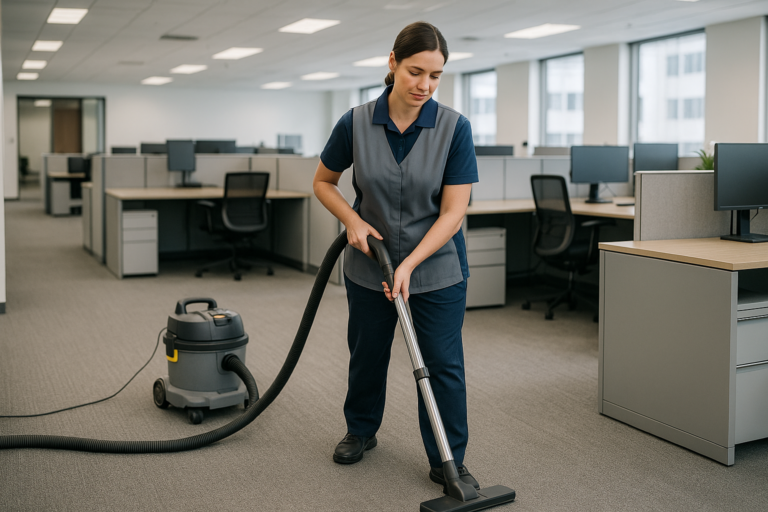
- Vacuuming carpeted areas
- Dusting reachable surfaces
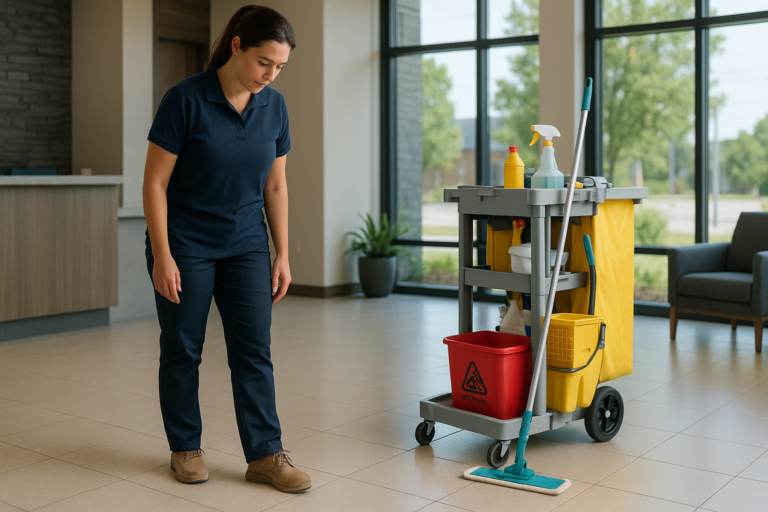
- Spot mopping and hard-floor upkeep
- Cleaning breakrooms and common areas
- Entry glass touch-up and general tidying
Typical frequency
Janitorial programs are usually scheduled:
- Nightly
- Several times per week
- Weekly (for lighter-use spaces)
For many offices, medical admin spaces, retail stores, and mixed-use facilities, janitorial service is the core program that keeps standards consistent over time.
What commercial cleaning usually includes
Commercial cleaning is a broader category that can include routine janitorial work, but in practice it often refers to more intensive or specialized services.
Typical commercial cleaning projects
- Floor stripping and waxing
- Carpet extraction
- Tile and grout deep cleaning
- High dusting or detail cleaning
- Post-construction cleanup
- Move-in/move-out cleaning
- One-time deep cleans before inspections or events
These services are usually not performed daily. They’re done as needed, seasonally, or on a planned maintenance cycle.
The most practical way to compare quotes
When you’re deciding between providers, don’t ask only, “Are you janitorial or commercial?” Ask this instead:
1) What is included every visit?
Get an itemized scope for recurring service. You should know exactly what happens each night or each scheduled visit.
2) What is considered extra?
Many frustrations happen when clients assume deep work is included but the contractor considers it a separate service.
3) How is quality checked?
A good provider should explain their quality control process, communication path, and how issues are corrected quickly.
4) Who supplies what?
Clarify whether paper products, soap, liners, and specialty chemicals are included or billed separately.
5) Is the plan adjusted by season?
In Maine, winter sand, salt residue, slush, and spring mud can punish floors and entryways. Your plan should adapt—not stay static year-round.
Maine-specific factors that impact your cleaning needs
Cleaning expectations in Maine facilities are heavily shaped by weather and traffic patterns.
Winter and shoulder seasons are tough on floors
Snow melt, salt, grit, and moisture can wear down hard floors and make lobbies look dirty fast. A plan that works in July may be inadequate in January.
Entryway strategy matters
Facilities that use layered matting, frequent entryway touchpoints, and periodic floor restoration tend to maintain a better appearance through harsh weather.
Local staffing consistency matters
In any service business, reliability comes down to people. Ask how the company handles coverage during storms, holidays, and vacation periods.
Which service type is right for your building?
In many cases, the best answer is not one or the other. It’s a combination.
You likely need janitorial service if:
- You want consistent day-to-day cleanliness
- Restrooms and trash need frequent attention
- You want predictable recurring cost and routine
You likely need commercial deep-clean services if:
- Floors look dull even with regular mopping
- Carpet has heavy traffic wear
- You’re preparing for a tenant transition, inspection, or event
- Your current routine service isn’t restoring appearance
Most facilities benefit from both
A common structure is:
- Routine janitorial service (daily or several times weekly)
- Quarterly or seasonal deep-clean services
- Annual floor or carpet restoration as needed
That model protects your space and helps prevent bigger cleanup costs later.
Common mistakes to avoid
When buyers are rushed, these are the mistakes we see most often:
- Choosing based on price alone without scope comparison
- Assuming “deep cleaning” is included in standard service
- Not defining measurable quality expectations
- Ignoring communication and issue-resolution process
- Using one static plan through all seasons
A low monthly number can become expensive quickly if tasks are omitted or constantly billed as add-ons.
A better way to request proposals
If you’re reaching out to multiple cleaning companies, send the same checklist to each one. Ask them to respond in writing.
Include:
- Building size and type
- Number of restrooms and breakrooms
- Traffic level and operating hours
- Desired service frequency
- Floor types and known problem areas
- Whether you want consumables included
- Preferred communication/contact structure
This makes pricing more apples-to-apples and helps you identify who is truly detail-oriented.
Final takeaway
The janitorial vs commercial cleaning question is really about routine maintenance vs specialized depth—and how clearly your provider defines each.
If you remember one thing, make it this: a cleaning plan should match your building’s real use, seasonal demands, and appearance standards. Titles matter less than execution.
At Clean Scene, we help Maine businesses build practical scopes that are clear, consistent, and easy to manage—without mystery line items or vague promises. If you want a baseline for routine service expectations, review our commercial cleaning services page.
Ready to review your current plan or compare options with confidence? Visit Get a Quote for a customized estimate, or reach out through Contact Us to start a conversation.