Medical Facility Cleaning in Bangor, Maine: A Higher Standard
When someone walks into a doctor’s office, urgent care clinic, or dental practice in Bangor, they’re already stressed. They might be sick. They might be worried. The last thing they should notice — or not notice, because something feels off — is a dirty waiting room, a bathroom that hasn’t been properly sanitized, or sticky surfaces in a treatment area.
Cleaning a medical facility isn’t the same as cleaning an office building or a retail space. The stakes are different. The protocols are different. And the people doing the work need to understand why every step matters — not just follow a checklist.
Here’s how Clean Scene approaches healthcare cleaning, and what separates a professional medical clean from a basic wipe-down.
Why Medical Facilities Require a Different Approach
Standard commercial cleaning focuses on appearance: floors look clean, surfaces aren’t dusty, bathrooms are tidy. That’s appropriate for most workplaces.
Medical facilities require appearance plus disinfection. The difference matters because:
- Patients are often immunocompromised. People receiving treatment may have weakened immune systems. Pathogens that wouldn’t affect a healthy person can cause serious infections in medical settings.
- Cross-contamination risk is real. High-touch surfaces — door handles, armrests, clipboards, pens, payment terminals — can transmit illness between patients if not properly disinfected.
- Regulatory standards apply. Healthcare facilities are subject to OSHA bloodborne pathogen standards and CDC infection control guidelines. Your cleaning service needs to know these standards.
- Trust is on the line. A visibly clean facility signals professionalism and care. A dirty one — even if it’s just a half-mopped floor or a streaked mirror — erodes patient confidence in your entire practice.
What “Medical-Grade” Cleaning Actually Means
The phrase “medical-grade cleaning” gets thrown around loosely. Here’s what it actually requires in practice:
EPA-Registered Disinfectants
Not all cleaning products are created equal. Medical facilities require disinfectants that are registered with the EPA and proven effective against pathogens relevant to healthcare settings — including MRSA, C. diff, and norovirus. The CDC provides guidance on which disinfectants meet healthcare-level standards.
We use EPA List N disinfectants — products verified effective against SARS-CoV-2 and other common healthcare-associated pathogens. We follow label contact times, which means the product stays wet on a surface long enough to actually kill what it’s meant to kill. (Wiping immediately defeats the purpose.)
High-Touch Surface Protocols
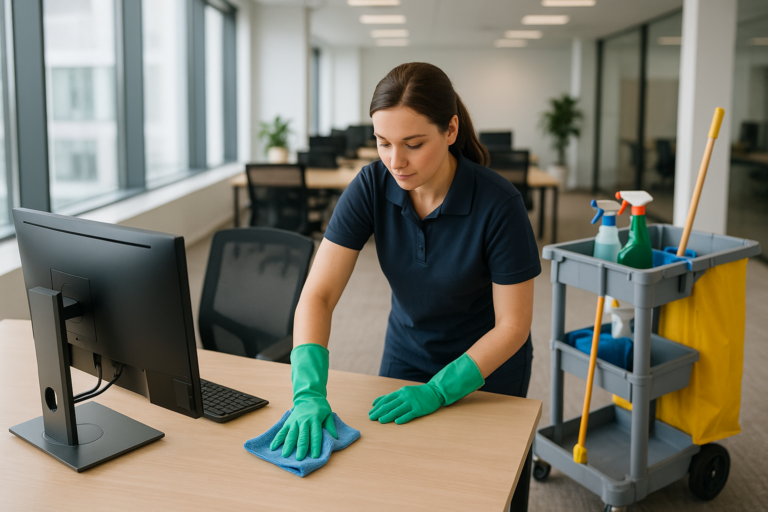
In a medical setting, high-touch surfaces get disinfected — not just wiped. Every visit. This includes:
- Door handles and push plates
- Light switches
- Counter edges and desk surfaces
- Chair armrests in waiting areas
- Pens and clipboards (if reused between patients)
- Faucet handles and soap dispensers
- Exam table paper (replaced) and the table itself
This isn’t optional. These are the surfaces that transmit illness.
Restroom Disinfection (Not Just Cleaning)
A clean-looking restroom and a properly disinfected restroom are not the same thing. We disinfect:
- Toilet seats, handles, and bases
- Sink basins, faucet handles, and soap dispensers
- Door handles — both sides
- Countertops and paper towel dispensers
The standard is contact-time disinfection, not a spray-and-wipe pass.
Waiting Room Protocols
Waiting rooms are where sick patients sit — sometimes for extended periods. We treat waiting room seating, side tables, and reception areas as high-risk zones and disinfect accordingly. If your practice sees a high volume of patients, we can structure cleaning visits around patient flow to minimize contamination buildup during the day.
Proper Waste Handling
Medical offices generate regulated waste — sharps, biohazardous materials — that requires separate handling and disposal. We understand what falls into our scope and what doesn’t. We never handle regulated medical waste outside of our training and your facility’s protocols.
Training and Accountability
Any cleaning company can claim they “clean medical facilities.” What matters is whether their crew actually understands the difference between cleaning and disinfecting, and whether they’re trained to follow healthcare protocols consistently — not just on good days.
At Clean Scene, our crew members who work medical accounts receive specific training on:
- Disinfection vs. cleaning — what each accomplishes and why both are necessary
- Proper product use, including dwell/contact times
- Cross-contamination prevention (color-coded cloths, proper sequence of rooms)
- What to do if they encounter a spill or potentially biohazardous situation
- How to work around patient care without disrupting operations
We’re a locally-owned company based in Bangor. Jonathan Boyd, the owner, knows every account personally. When you call Clean Scene, you’re not talking to a national franchise’s call center — you’re talking to the people who actually do the work.
What Types of Medical Facilities Do We Service?
We work with a range of healthcare-adjacent facilities in the Bangor area, including:
- Medical and primary care offices
- Dental practices
- Mental health and counseling offices
- Physical therapy and chiropractic clinics
- Urgent care facilities
- Specialty practice waiting rooms and administrative areas
If you’re in a healthcare-adjacent space and you’re not sure whether your cleaning needs fall into “standard commercial” or “medical,” the answer is almost always: talk to us first. We’ll assess your specific situation and give you an honest answer.
Why “Good Enough” Isn’t Good Enough Here
A poorly cleaned medical facility doesn’t just look unprofessional. It can contribute to healthcare-associated infections — a problem the CDC estimates affects roughly 1 in 31 hospital patients on any given day. That number is for inpatient hospitals, but the underlying cause — inadequate disinfection of shared surfaces and environments — is just as relevant in outpatient settings.
Cleaning services that cut corners, skip contact times, use the wrong products, or don’t train their staff properly are a liability risk for medical practices. And in Maine, where word travels fast in a tight-knit community like Bangor, one incident can damage a practice’s reputation.
You built your practice on trust. The facility it operates in should reflect that same standard.
Ready to Talk About Your Facility?
If you operate a medical, dental, or healthcare-adjacent facility in Bangor or the surrounding area, we’d like to earn your business — but more importantly, we’d like to show you what professional healthcare cleaning actually looks like.
Get a no-obligation quote from Clean Scene: Request a Quote
Already know what you need? Contact us directly — we respond the same business day.
We also clean commercial offices, retail spaces, and event venues. See all our services.