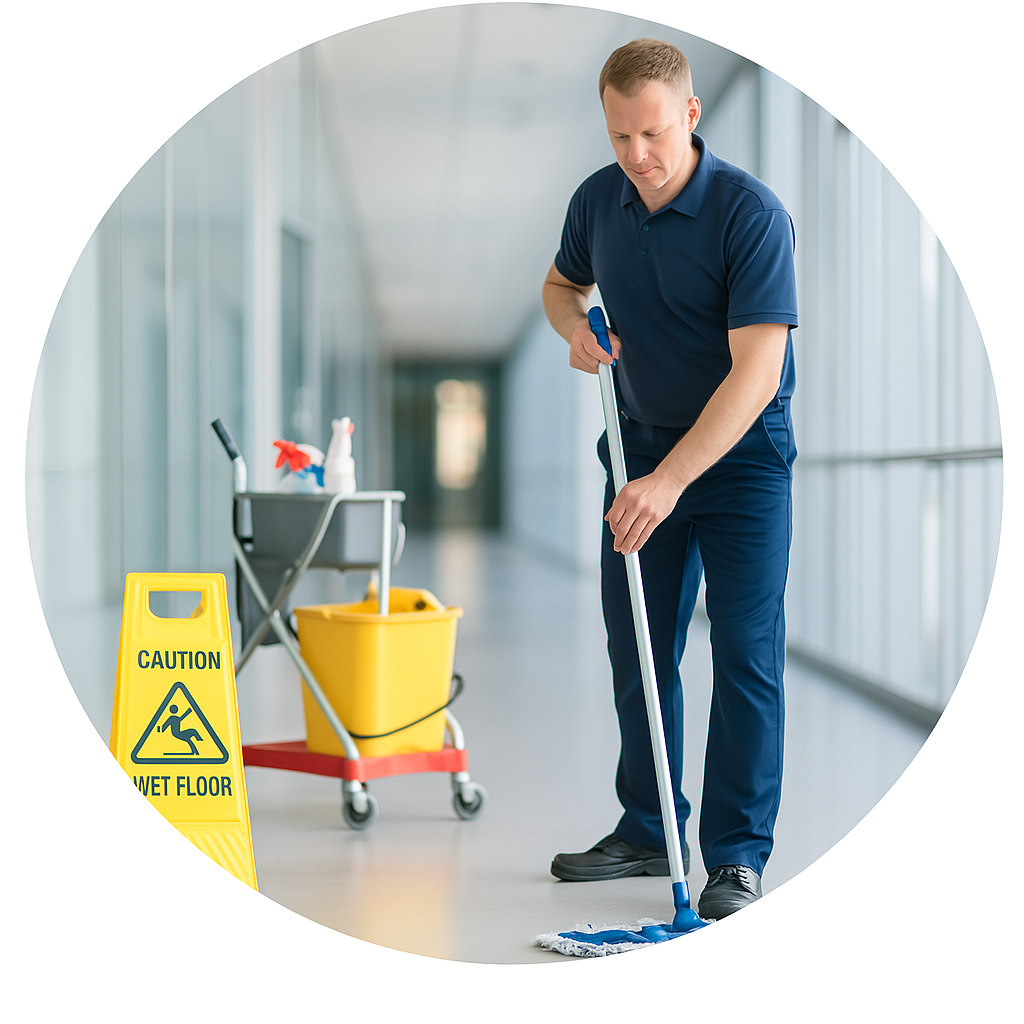
Maine is stunning in October — the foliage, the crisp air, the woodsmoke in the morning. It’s also the month when every business owner starts watching their floors get destroyed.
Wet leaves. Mud from rain-soaked parking lots. Grit tracked in by boots. Pine needles in carpet fibers. By the end of October, the entrance of an unmanaged commercial space looks like the forest floor followed your clients inside.
That’s not just an aesthetic problem. Wet, leaf-debris-covered floors are a genuine slip hazard — and according to OSHA, same-level slips, trips, and falls account for the majority of general industry accidents. The cost of one lawsuit dwarfs a season of professional cleaning.
Here are five floor cleaning priorities Maine businesses need to lock in right now, while October is just getting started.
1. Upgrade Your Entry Mat System Before Week Two
If you have a single rubber mat at your entrance, you’re already behind. A single mat captures maybe 20% of the debris and moisture your clients track in. By the time someone reaches your reception desk, they’ve already dragged the rest of October across your floor.
A proper commercial entry system uses a two-mat approach:
- Exterior scraper mat — textured, aggressive surface that knocks loose mud and leaf debris from shoes before they cross the threshold
- Interior absorbent mat — thicker, designed to pull moisture from shoe soles before it reaches your hard floors or carpet
During peak leaf season, mats need to be shaken out or vacuumed daily and replaced with clean ones at least twice a week. A mat that’s saturated with moisture and debris doesn’t absorb anything — it becomes part of the problem.
If your cleaning service isn’t checking and refreshing entrance mats at every visit, that’s a gap worth addressing. See our nightly office cleaning checklist for what a thorough routine looks like in practice.
2. Sweep and Damp-Mop Hard Floors More Frequently
During the summer, weekly hard floor maintenance is often enough. In October, it isn’t.
Here’s what happens without daily sweeping: leaf tannins (the compounds that give fall leaves their color) leave brown stains on vinyl, tile, and hardwood when wet debris sits on the surface. It looks like dirt even after mopping because the tannin has already bonded with the floor finish. Remove it before it dries and you’re fine. Let it sit overnight and you’re scrubbing.
October hard floor maintenance should include:
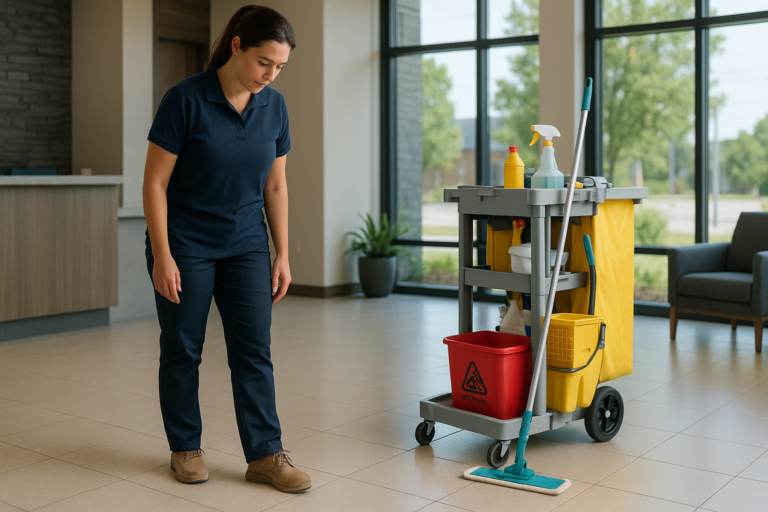
- Daily dry sweep or dust-mop of all high-traffic areas — entrances, hallways, break rooms
- Damp mop with a pH-neutral cleaner every 1–2 days in wet weather
- Spot-clean tracking paths immediately after heavy rain or muddy conditions
- Check corners and baseboards where wet debris accumulates and gets missed
If you’re on a 3x-per-week cleaning schedule and October starts hitting, consider temporarily adding a daily sweep-through on the days your crew isn’t in. It takes 10 minutes and saves you from re-finishing floors in November.
3. Protect Carpet From Seasonal Embedding
Carpet is where October really wins if you’re not paying attention. Grit and leaf particles embed in carpet fiber quickly — and once embedded, foot traffic grinds them deeper, abrading the fibers and permanently dulling the appearance.
Autumn carpet priorities:
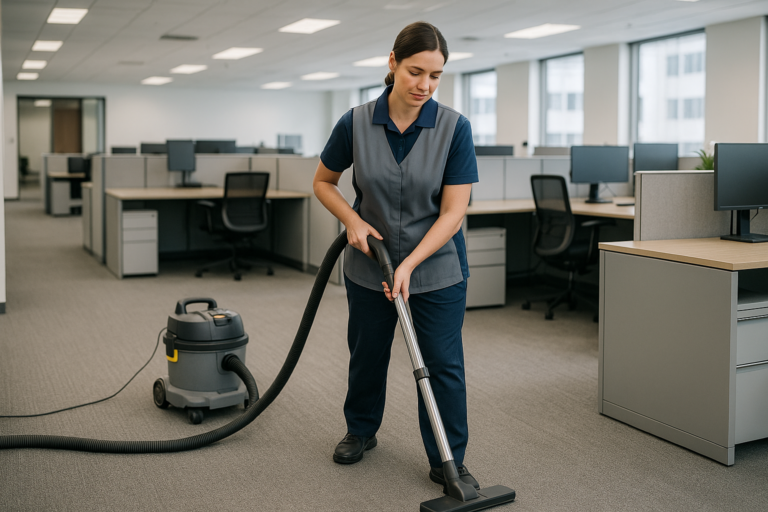
- Vacuum high-traffic areas daily — entrance runners, reception, hallways
- Use a commercial-grade vacuum with a beater bar (standard uprights often just pass over embedded grit)
- Spot-treat moisture tracking immediately — damp leaves pressed into carpet create mold risk if left overnight
- Consider interim interim carpet extraction mid-October if foot traffic is high — don’t wait until December’s post-holiday deep clean
The ISSA (Worldwide Cleaning Industry Association) recommends interim extraction for commercial carpet every 30–90 days in high-traffic environments. October is exactly the window to schedule that work — before the salt and sand from winter compacts into the problem even further.
4. Address Slip Hazards at Every Entrance and Transition Point
The liability angle isn’t scare-mongering — it’s math. One fall in an unguarded wet entrance, and the cost of not having proper floor maintenance becomes painfully concrete.
This month, walk your building with fresh eyes and identify:
- Transition points where wet entrance floors meet dry carpet or tile — these create invisible wet spots 6–10 feet into the building
- Entries without weather vestibules that allow rain to blow directly onto hard floors
- Inadequate signage — “Wet Floor” cones are cheap, legally important, and widely ignored by cleaning crews who forget to deploy them
- Damaged or curled mat edges that create trip hazards of their own
If you have a second entrance that’s used seasonally (delivery bay, side access), check it. These areas often get ignored in cleaning schedules even though they carry heavy traffic in fall when contractors and delivery drivers are working outdoors constantly.
5. Schedule a Professional Floor Assessment Before Winter
October is the optimal window for a professional floor assessment — before the salt season begins, while you can still see and treat what October has done, and before winter compounds the problem with road salt and sand.
A professional cleaning walkthrough should include:
- Floor condition assessment — where is finish wearing, where are staining patterns developing, what’s the current slip risk
- Mat placement review — are your current mats covering the actual tracking paths
- Carpet fiber check — is there embedded debris that vacuuming can’t address
- Grout line inspection in tile areas (grout absorbs tannins and grit and needs periodic cleaning to prevent permanent discoloration)
At Clean Scene, we include this kind of walkthrough when businesses are evaluating or adjusting their service. It costs nothing and gives you a concrete picture of what your space needs — not a generic sales pitch. Schedule a walkthrough before November and go into winter with a plan.
October Is the Setup Month for Winter
What you do with your floors in October determines what they look like in March. Businesses that get ahead of seasonal tracking maintain cleaner spaces year-round at lower overall cost — because prevention is always cheaper than restoration.
If your current cleaning service is treating October like August, it’s time to have a conversation. The season has changed. Your cleaning frequency and protocols should change with it.
Clean Scene serves commercial businesses throughout the Bangor area and central Maine. We adjust to seasonal conditions — it’s part of what it means to be a locally owned Maine company that actually understands what October does to a building.
Get a free quote or contact us to talk through what your space needs this fall.