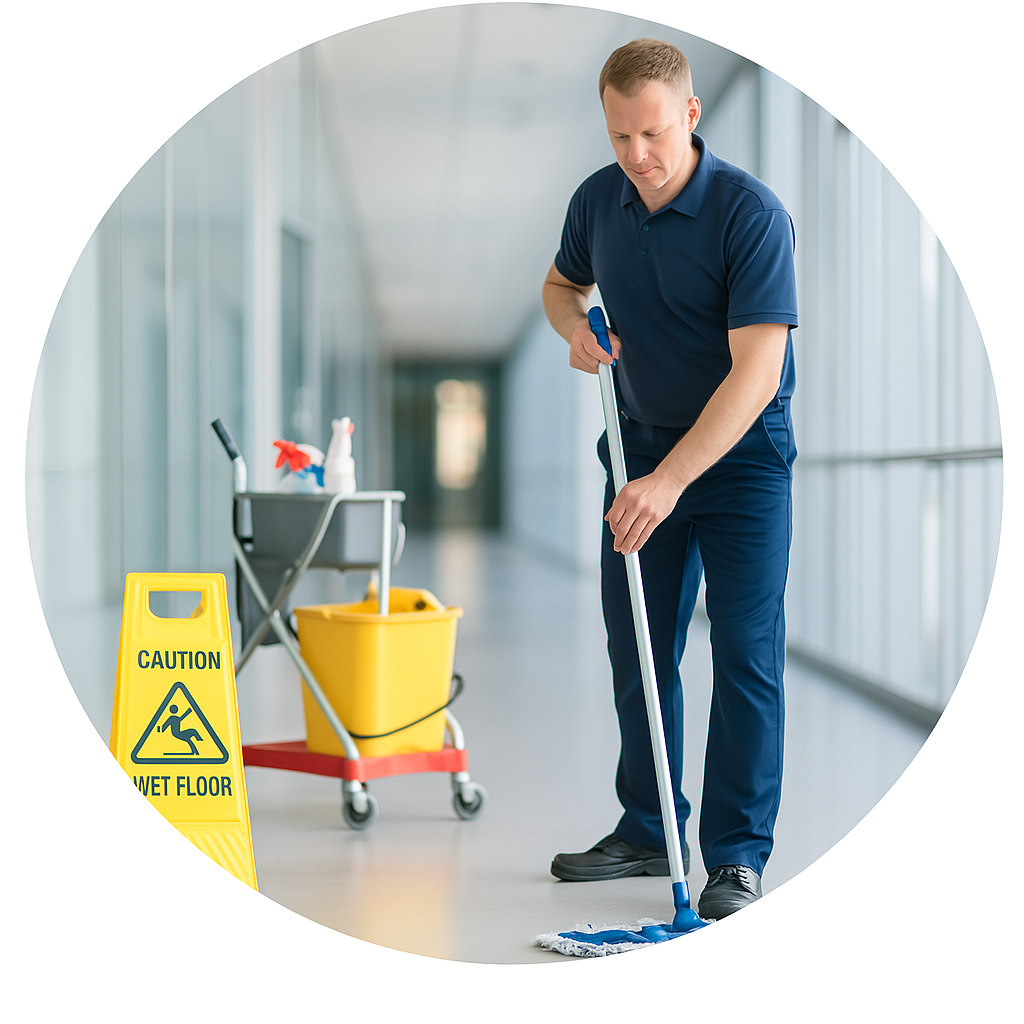
September in Maine is beautiful — the leaves are starting to turn, the air is crisp, and ragweed is absolutely raging. If you run a commercial space in Bangor or anywhere else in central Maine, your building is fighting an invisible battle right now: pollen, mold spores, and airborne allergens are spiking, and they’re moving indoors every time someone opens a door.
Here’s what that means for your business: more sneezing employees, more distracted customers, and — if left unchecked — a real hit to workplace productivity. The good news is that intentional commercial cleaning is one of the most effective tools for managing allergen load in your building. Here are the five priorities that matter most right now.
1. HVAC Filters and Air Return Vents
Your HVAC system is either your best ally or your biggest allergen distributor — depending on when you last serviced it.
In September, outdoor allergen counts in Maine reach their annual peak. Ragweed pollen is microscopic and travels miles on the wind. Every time your HVAC pulls air in, it’s also pulling in whatever’s floating around outside. If your filters are past their service date, you’re not filtering — you’re just circulating.
What to do this month:
– Replace HVAC filters with MERV-11 or higher rated options
– Vacuum and wipe down air return vents and grilles — these collect dust and debris fast
– If you have ceiling cassette units, pull the panels and clean the internal components
– Consider scheduling a duct inspection if you haven’t had one in 2+ years
The EPA has detailed guidance on indoor air quality and filtration that’s worth bookmarking for facility managers.
2. Hard Floor Deep Cleaning (Before Grit Season Starts)
Here’s something most business owners don’t think about: September is the last real window to deep clean hard floors before Maine’s grit season arrives. Once November hits and people start tracking in sand and road salt, surface buildup becomes a daily battle.
Right now, floors in high-traffic areas — lobbies, hallways, break rooms — are accumulating late-summer dust, tracked-in pollen, and general grime from months of foot traffic. That debris sits in grout lines, under furniture, and along baseboards, and it contributes to the allergen load in your air every time it gets disturbed.
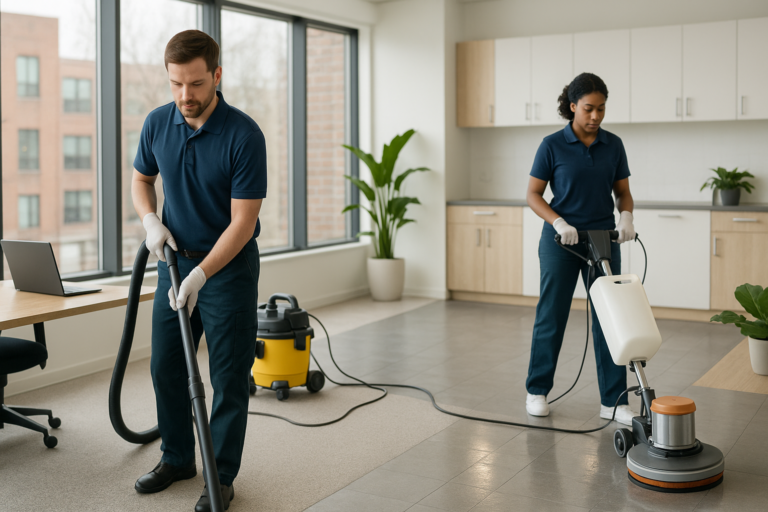
A professional deep scrub now accomplishes two things: it removes the summer buildup before it gets locked in under fall and winter layers, and it gives your floors a clean slate to maintain through the cold months.
For businesses in downtown Bangor especially, where foot traffic is heavy and construction dust is a year-round reality, this is a September non-negotiable.
3. Restroom Ventilation and Grout Cleaning
Restrooms are September’s hidden problem area. High humidity from the warmer months creates ideal conditions for mold growth in grout lines, behind fixtures, and around floor drains. As temperatures start to swing — warm afternoons, cold nights — that moisture gets trapped.
Mold spores are a major allergen trigger, and restroom mold doesn’t stay in the restroom. It circulates through the ventilation system into the rest of your building.
September restroom priorities:
– Deep scrub all tile grout with an enzyme-based cleaner — not just surface mopping
– Check and clean exhaust fan covers (they’re usually clogged with dust)
– Treat any visible mold growth at the source before it spreads
– Confirm floor drains are clear and flowing properly
If your cleaning service is just doing surface maintenance and skipping grout and drain work, that’s a conversation worth having. Clean Scene’s commercial restroom service includes full deep cleaning of grout, fixtures, and ventilation — not just a mop pass.
4. Upholstered Furniture and Fabric Surfaces
Open plan offices and waiting areas often have upholstered chairs, fabric room dividers, or soft furniture that collects allergens like a sponge. Fabric surfaces trap pollen, pet dander brought in on clothing, and dust mite debris — none of which routine vacuuming fully removes.
In September, those surfaces are carrying a summer’s worth of accumulated allergens just waiting to be disturbed every time someone sits down.
For businesses with significant upholstered seating — medical waiting rooms, professional offices, coworking spaces — professional fabric cleaning is worth scheduling annually, and fall is the right time. It removes the summer buildup before you close up the building for winter and recirculate everything through your heating system.
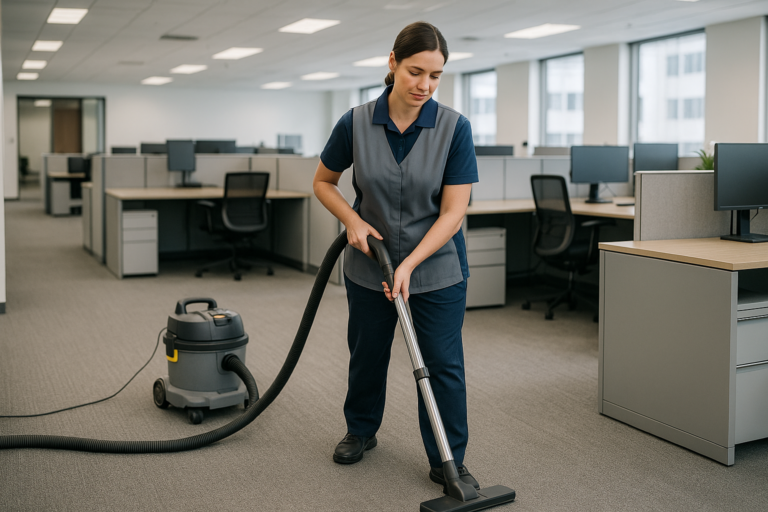
For daily maintenance, vacuum upholstered surfaces with a HEPA-filter vacuum rather than a standard unit. Standard vacuums often exhaust fine particles back into the air.
5. Entry Matting and Door Zones
Your front door is ground zero for allergen transfer in September. Every person who walks in brings pollen, mold spores, and outdoor debris on their shoes and clothing. Entry matting is the first line of defense — but only if it’s actually working.
Most commercial entry mats need replacement or professional cleaning every 6-8 weeks during high-traffic periods. If your mat is saturated, compressed, or visibly dirty, it’s no longer capturing anything — it’s just redistributing it.
What good entry zone management looks like:
– Two-stage matting: a scraper mat outside to knock off debris, an absorbent mat inside to capture fine particles
– Mats cleaned or replaced on a regular schedule, not just when they look bad
– Entry zone floors swept and mopped frequently — at least daily in busy buildings
– Glass doors wiped down regularly — pollen sticks to glass and transfers to hands
This sounds basic, but it’s consistently one of the highest-ROI cleaning interventions for allergen control. Stopping allergens at the door is dramatically cheaper and more effective than trying to remove them from the rest of the building after the fact.
Why September Is the Right Time to Act
Maine’s fall allergen season is front-loaded. Ragweed typically peaks in late August through mid-September, then drops off. Mold spores peak in October when leaves start decomposing. Acting now — in the first two weeks of September — means you’re getting ahead of both peaks.
Buildings that get professional cleaning attention in September consistently outperform those that wait until the “obvious” cleaning windows (post-winter, pre-summer). Your employees breathe easier, call in sick less often, and your building comes out of fall in better condition.
If you’d like to talk through what a September deep clean looks like for your specific space, get a free quote from Clean Scene or contact us directly. We serve businesses across Bangor, Brewer, Orono, Hampden, and surrounding communities in central Maine.
Clean Scene Inc. is a locally owned commercial cleaning company serving central Maine since 2020. We specialize in office buildings, medical facilities, retail spaces, and more.