Every September, the same thing happens across Maine: the air gets crisp, the leaves start turning, and within a few weeks, the sneezing starts. Cold and flu season doesn’t arrive overnight — it builds gradually through October — but the businesses that come through fall with minimal sick days are the ones that get ahead of it now, not after the first round of absences.
If you run a commercial space in Bangor or anywhere else in central Maine, mid-September is your window. Here are the five commercial cleaning priorities that matter most right now, before the season hits.
1. Disinfect High-Touch Surfaces on a Real Schedule
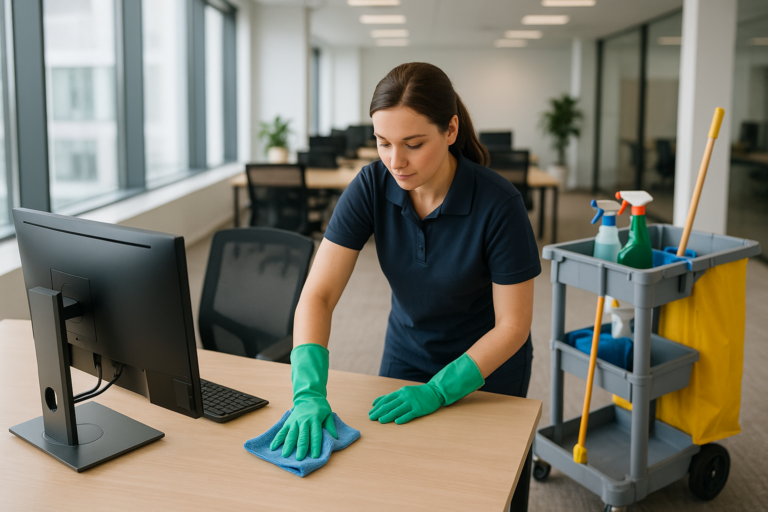
This sounds obvious, but most businesses don’t actually have a documented high-touch surface disinfection schedule. There’s a difference between “we wipe things down when they look dirty” and “we disinfect door handles, light switches, elevator buttons, and shared equipment on a defined cycle.”
During cold and flu season, respiratory viruses can survive on hard surfaces for hours — sometimes longer. The most common transmission points in commercial buildings are the ones everyone touches without thinking about: door handles, bathroom faucets, shared keyboards, copier touchscreens, and break room appliance controls.
What a real schedule looks like:
– High-touch surfaces in common areas: disinfected at least once daily, more frequently during cold/flu season
– Restroom fixtures: disinfected every cleaning cycle, with documented verification
– Shared office equipment: wiped down at the start and end of each shift
– Break room surfaces (especially coffee makers, microwaves, refrigerator handles): daily minimum
The CDC’s guidance on surface disinfection recommends EPA-registered disinfectants with proven efficacy against respiratory viruses. At Clean Scene, we use hospital-grade disinfectants across all commercial accounts — not general-purpose sprays.
2. Deep Clean Break Rooms Before the Season Peaks
The break room is where cold and flu viruses live. Shared food, shared appliances, crowded lunch hours, and relaxed hygiene habits in a casual setting make it ground zero for transmission in any office environment.
By mid-September, break rooms in most Maine businesses have also accumulated a full summer’s worth of buildup: grease behind the microwave, mold under the coffee maker, grime in the refrigerator seals, and residue in the corners that routine cleaning misses. That buildup isn’t just unsanitary — it creates environments where bacteria and mold thrive right as your team’s immune systems are about to be challenged by seasonal illness.
A professional break room deep clean before October should include:
– Full refrigerator cleanout and interior sanitization (including door seals)
– Microwave interior, exterior, and ventilation grille
– Behind and beneath appliances
– Cabinet interiors, especially near the sink
– Sink, faucet handles, and drain treatment
– Floor scrubbing, including under movable equipment
This isn’t weekly maintenance work — it’s a reset that your regular cleaning schedule doesn’t cover. It takes a professional crew two to three hours to do correctly for a mid-sized break room.
3. Replace or Upgrade Air Filtration Before You Seal the Building
Here’s the issue with heating season: the moment you close your windows and switch from cooling to heating, your indoor air quality changes dramatically. You’re now recirculating whatever is already in the building — including any viruses, mold spores, or allergens that have accumulated since summer.
If your HVAC filters are standard MERV-8 or lower, they’re capturing larger particles but letting fine respiratory droplets and mold spores pass right through. Upgrading to MERV-11 or MERV-13 before you seal the building for fall makes a measurable difference in airborne pathogen load.
Fall HVAC prep for Maine businesses:
– Replace filters before switching from cooling to heating mode
– Clean air return vents and grilles — these collect significant dust over summer
– Check that bathroom and break room exhaust fans are functioning (they’re often clogged)
– Consider a portable HEPA air purifier in high-occupancy areas like conference rooms
If you’re in a shared commercial building in Bangor where you don’t control the central HVAC, this becomes even more important at the unit level. Portable filtration is one of the best investments a business can make for a space they don’t fully control.
4. Professional Carpet Cleaning Before Grit Season
September is your last realistic window for professional carpet cleaning before Maine’s grit season begins. Once October arrives and you’re tracking in early frost debris, followed by November’s sand and salt, carpets get dirty fast — and deep cleaning wet carpets in cold, damp weather is significantly less effective because they don’t dry properly.
Carpets also play a significant role in indoor air quality. They trap allergens, dust mite debris, mold spores, and bacteria that accumulate through foot traffic. When that carpet gets disturbed by foot traffic, those particles become airborne. In a building about to be sealed for winter with a team about to face cold and flu season, carpet hygiene matters more than most business owners realize.
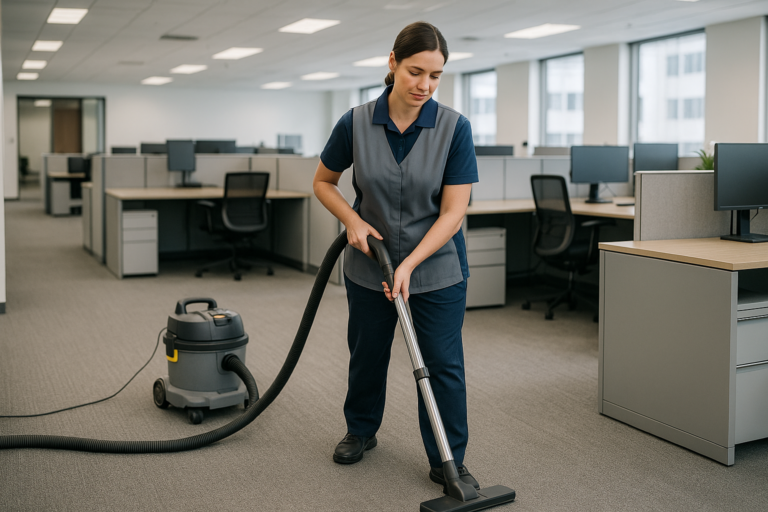
Professional hot-water extraction (steam cleaning) removes what vacuuming can’t. For most commercial spaces with moderate to high foot traffic, annual cleaning is the minimum — and fall is the right time.
5. Establish a Sick Day Protocol with Cleaning Support
This one is less about what your cleaning crew does and more about how you support your team when illness does arrive (because no amount of cleaning eliminates all risk during cold and flu season).
When an employee calls in sick with a respiratory illness, that means the surfaces they spent the most time touching — their desk, chair, keyboard, phone — have been exposed. A rapid disinfection response to that specific workspace matters.
A simple sick day protocol:
– Designated cleaning contact who responds to reported illness within the same business day
– Disinfection of the sick employee’s workspace, chair, and nearby high-touch surfaces
– Reminder communication to the team about handwashing and surface hygiene
– Temporary high-frequency cleaning in their area for 48 hours after they return
If your commercial cleaning service doesn’t offer responsive spot disinfection as part of your contract, that’s worth asking about. At Clean Scene, our accounts include the ability to request targeted cleanings outside the regular schedule — because real life doesn’t always happen on a schedule.
Why Mid-September Is the Right Time
Maine’s cold and flu season typically builds through October and peaks in November and December. Getting these five priorities done in mid-to-late September means you’re ahead of the curve — not scrambling when the first round of absences hits.
The businesses that consistently report fewer sick days aren’t doing anything exotic. They’re maintaining clean HVAC systems, keeping break rooms properly sanitized, disinfecting high-touch surfaces on a schedule, and cleaning carpets before the season locks them in. Those are the fundamentals, done consistently.
If you’d like to talk through what a fall cleaning plan looks like for your specific space — including scheduling and pricing — get a free quote from Clean Scene or reach out directly. We serve Bangor, Brewer, Orono, Hampden, Hermon, and surrounding communities across central Maine.
Clean Scene Inc. is a locally owned commercial cleaning company serving central Maine since 2020. We specialize in office buildings, medical facilities, retail spaces, and more. Learn about our commercial cleaning services.