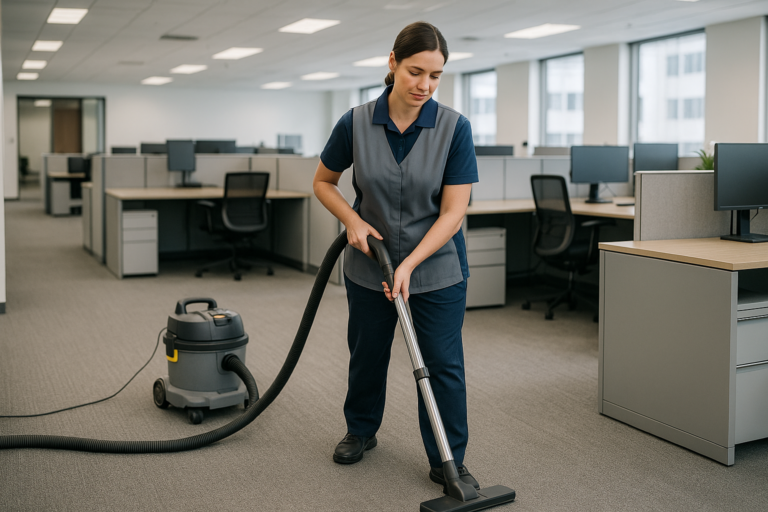
Winter in Maine is hard on a lot of things — and your business floors are near the top of the list.
Salt, slush, sand, ice melt, and the constant in-and-out of wet boots can destroy hard floors and grind dirt deep into carpet fibers within weeks. By February, the damage is done. But right now, in mid-October, you still have a window to get floors in good shape before the worst of it hits.
Here are 5 commercial floor care priorities Maine businesses should act on this month — before November weather makes everything harder.
1. Deep Clean Carpets Before the Cold Arrives
Carpet is one of the most underserviced assets in commercial buildings — and the one that shows the most dramatic improvement from timely cleaning.
Here’s the problem: dirt, pollen, and fall debris that get ground into carpet fibers in October become much harder to extract in January. Cold weather makes fibers contract slightly, trapping particles more deeply. Cleaning companies are also busier in winter months, which means longer waits and higher costs for scheduling.
October is the ideal window. Carpets can dry quickly in moderate fall temperatures, and getting them fully clean before winter salt tracking begins prevents that grey, dingy look that takes over commercial carpets from November through March.
If your carpets haven’t had a professional extraction cleaning since spring or summer, this week is the right time to schedule it. Clean Scene offers commercial carpet cleaning across Bangor, Brewer, and central Maine.
2. Assess and Upgrade Your Matting System
Most Maine businesses are under-matted — and they don’t know it until winter.
The ISSA (Worldwide Cleaning Industry Association) recommends a minimum of 15 feet of quality entrance matting at primary access points to capture debris before it enters the building. That’s a two-mat system: a scraper mat outside and an absorptive mat inside, with enough linear footage to work.
Why does it matter? Matting captures up to 80% of the dirt that enters a building. Every foot of mat that’s missing translates directly to more debris on your floors, more frequent cleaning cycles, and faster wear on surfaces.
Check your current mats now:
- Are they large enough to take at least 4–5 full steps per mat?
- Are they still gripping the floor, or have they started to curl and slide?
- Are they being cleaned regularly, or have they become dirt-saturated — effectively carrying debris in rather than stopping it?
If any of those answers is “no,” October is the time to address it. Mats ordered now arrive before the first real snow.
3. Evaluate Hard Floors for Protective Treatments
Hardwood, LVP, tile, and polished concrete all benefit from protective treatments — and all of those treatments are better applied before winter stress begins.
For hardwood and LVP: look for scratches, scuffs, and areas where finish is worn thin. The finish is what protects the actual surface; once it’s gone, salt and sand abrade the material itself. A professional buff-and-coat now extends the life of your floor significantly.
For tile with grout: grout is porous and absorbs salt residue, staining over the winter. A grout sealer applied in October creates a barrier that makes winter maintenance dramatically easier.
For polished concrete or epoxy floors: check for chips, cracks, or areas where coating has lifted. Salt and moisture get into cracks and expand the damage through freeze-thaw cycles.
None of this is expensive if you catch it now. All of it becomes expensive if you don’t.
4. Establish a Salt and Ice Melt Protocol
This one is often missed — and it causes real damage every year.
Ice melt products (calcium chloride, magnesium chloride, sodium chloride) are corrosive to floor finishes and grout. When they’re tracked inside on boots, they leave white residue that reacts with floor surfaces over time. The solution isn’t to stop using ice melt — it’s to have a cleaning protocol that specifically addresses salt removal.
That means:
- Daily damp mopping of high-traffic hard floor areas with a pH-neutral floor cleaner that emulsifies salt residue
- Frequent mat changes — saturated mats stop trapping and start redistributing
- Weekly spot checks on grout lines and floor finish for early signs of salt damage
Talk to your commercial cleaning company about whether their winter protocol includes salt-specific cleaning steps. At Clean Scene, we adjust our cleaning approach for every season — because Maine winter cleaning isn’t the same job as summer cleaning.
5. Schedule a Pre-Winter Walkthrough
The best investment a Maine business can make right now is 20 minutes with a professional who can identify the specific vulnerabilities in your facility before winter starts.
Every building is different. A multi-tenant office in downtown Bangor has different floor care needs than a retail shop in Brewer or a clinic in Orono. The right matting placement, the right cleaning products, the right schedule — all of it depends on your traffic patterns, your floor surfaces, and how your space is used.
A walkthrough lets you make smart decisions now rather than reactive ones in January when damage is already done.
We offer free walkthroughs for Maine businesses across our service area. Request yours here and we’ll come assess your space, identify your highest-risk areas, and give you a clear picture of what it takes to protect your floors through the Maine winter.
Don’t Wait for the First Snow
The first real snowfall of the season always catches Maine businesses a little off guard — even when we know it’s coming. By the time you’re dealing with slush at the door and salt on the floors, the window to prevent damage has closed.
Mid-October is exactly the right time to act. Whether it’s a carpet cleaning, better mats, or a full pre-winter facility walkthrough, the steps you take now pay off every month from November through March.
Contact Clean Scene or get a free quote to get started this week. We serve businesses throughout Bangor, Brewer, Orono, Hampden, Hermon, and central Maine.