Maine summers are beautiful — but what’s happening inside your building may tell a different story. While customers enjoy the sunshine outside, July heat and humidity can quietly degrade the indoor air quality of your commercial space. The result? Musty odors, allergy flare-ups, reduced employee productivity, and a subtle signal to anyone who walks through your door that something’s off.
The good news: professional commercial cleaning directly impacts indoor air quality in ways that most business owners don’t realize. Here’s what you need to know heading into the heart of Maine’s summer season.
Why Indoor Air Quality Gets Worse in July
Indoor air quality (IAQ) is a year-round concern, but summer introduces a specific combination of factors that make it worse — especially in Maine:
- Humidity. Maine July humidity averages around 70–80%. Moist air promotes mold and mildew growth inside HVAC systems, under carpet, and in restrooms. Even at levels you can’t see yet, mold spores circulate through the air.
- Increased foot traffic. Summer brings more customers, vendors, and visitors into your space. Every person brings in pollen, dust, outdoor pollutants, and bacteria on their shoes and clothing.
- Pollen. Maine’s summer pollen counts remain elevated through mid-July, and it gets tracked inside constantly on shoes and clothing — settling into carpet, upholstered furniture, and air vents.
- Stagnant air. Many commercial spaces run air conditioning that recirculates interior air. Without regular cleaning of surfaces, vents, and HVAC filters, you’re recirculating dust, allergens, and microbial particles.
The EPA has consistently ranked indoor air as 2–5 times more polluted than outdoor air. In summer, that gap can be even wider.
How Commercial Cleaning Improves Indoor Air Quality
This is where professional cleaning goes beyond appearances. When done right, commercial cleaning actively reduces the pollutants circulating through your space.
Carpet and Floor Maintenance
Carpet acts like a giant air filter — it traps dust, pollen, pet dander, and bacteria. That’s actually a good thing, until the carpet becomes saturated. At that point, every footstep releases those particles back into the air.
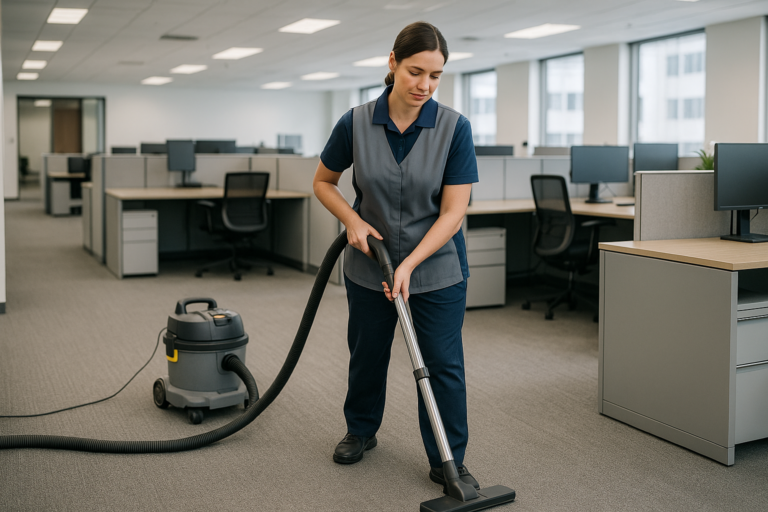
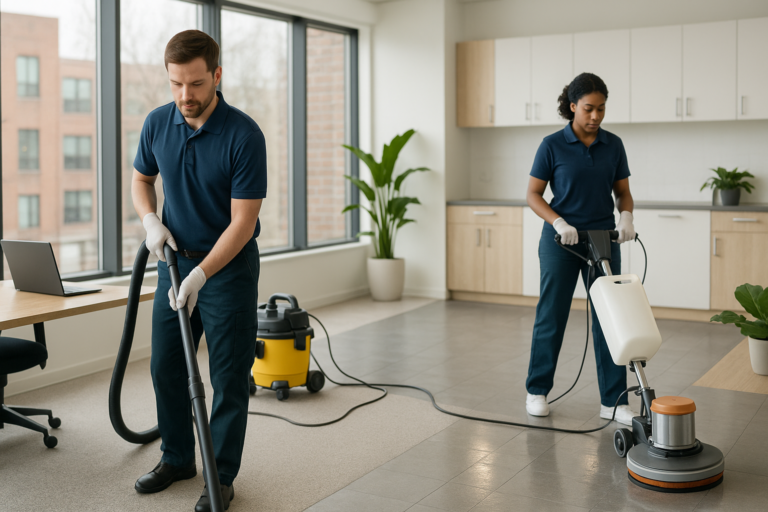
Professional vacuuming with HEPA-filtered equipment removes trapped particles instead of redistributing them. Regular maintenance (at least 3x per week in high-traffic areas) keeps carpets functioning as a filter rather than a source of contamination.
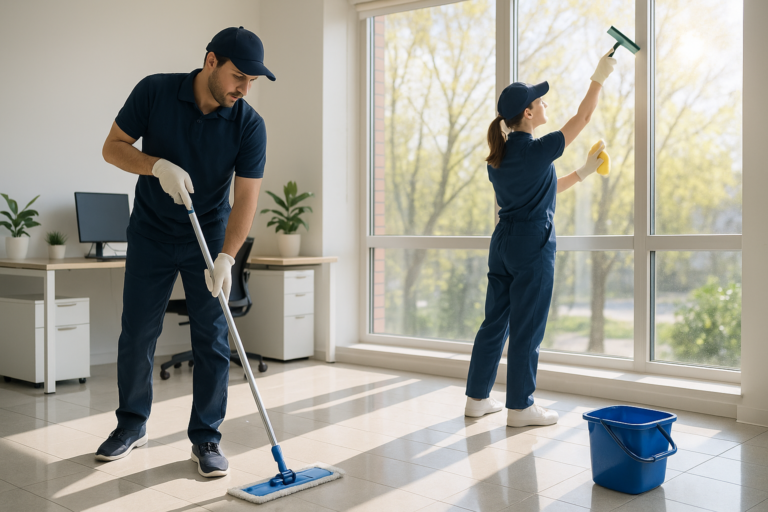
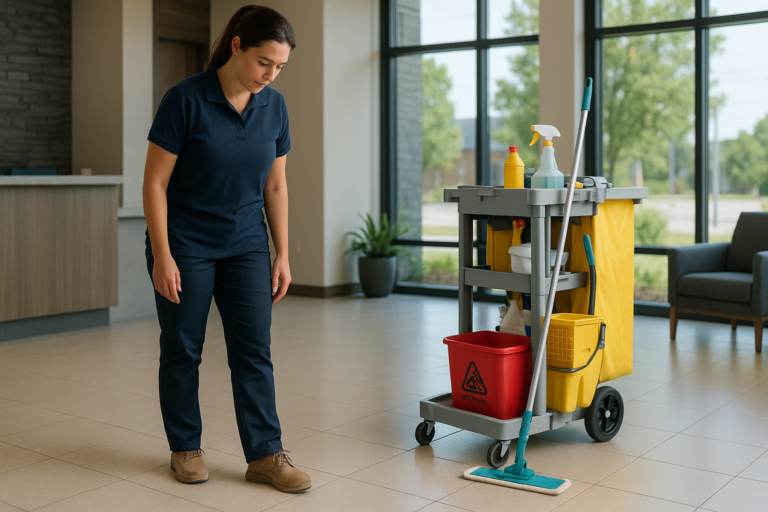
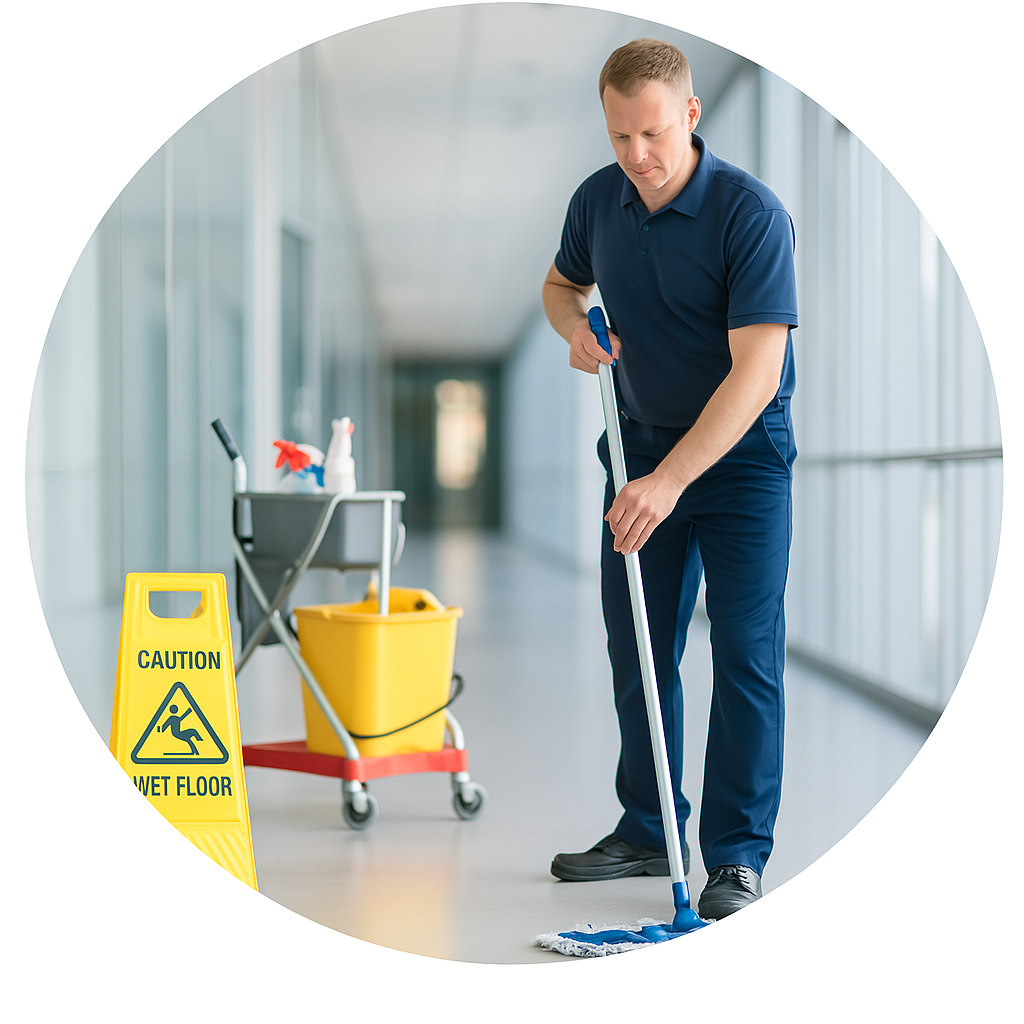
Hard floors aren’t exempt. Dust and fine particles on hard surfaces become airborne with foot traffic. Proper damp mopping — not dry sweeping — captures fine particles rather than suspending them.
High-Touch Surface Disinfection
Bacteria and viruses don’t just spread through the air — they transfer from hands to surfaces and back again. High-touch areas like door handles, light switches, reception counters, elevator buttons, and restroom fixtures are constant vectors.
In July, when your space is busier than usual, these surfaces accumulate pathogens faster. Regular disinfection breaks that cycle.
Restroom Sanitation
Restrooms are the single biggest source of airborne pathogens in most commercial spaces. Toilets aerosolize bacteria when flushed — a phenomenon called “toilet plume” — and poor ventilation lets those particles linger.
Professional restroom cleaning includes disinfecting all surfaces, cleaning floor drains, and ensuring exhaust fans are clear and functional. Skipping or rushing this step has air quality consequences that extend well beyond the restroom.
Breakroom and Kitchen Areas
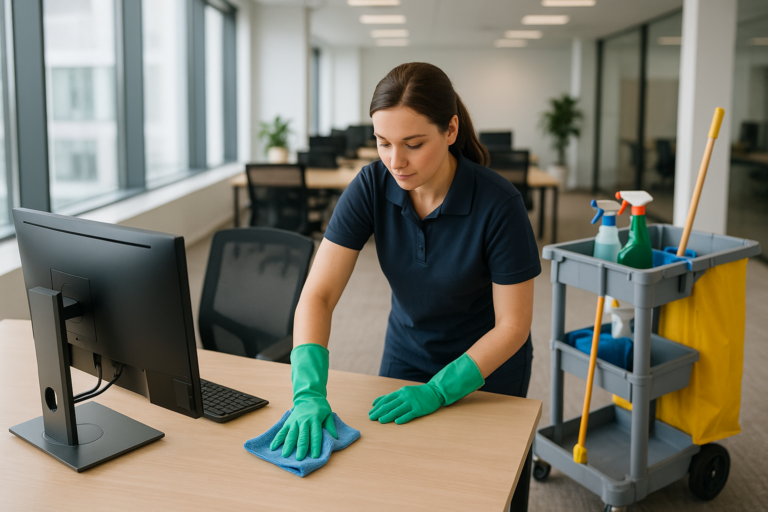
Food odors, spills, and moisture in breakrooms create ideal conditions for mold and bacteria growth. Summer heat accelerates this. Counters, sinks, microwaves, and refrigerator exteriors all need regular disinfection — not just a wipe-down.
A clean breakroom also means better employee morale and fewer sick days, which matters especially during your busiest season.
What to Ask Your Commercial Cleaning Provider
Not all cleaning is equal when it comes to air quality. If you’re evaluating your current cleaning service — or considering hiring one — here are the right questions:
- Do you use HEPA-filtered vacuums? Standard vacuums exhaust fine particles back into the air. HEPA filters capture them.
- What products do you use in restrooms? Hospital-grade disinfectants rated for restroom pathogens are the standard.
- Do you clean HVAC vents and diffusers? Dusty vents pump dust directly into your air. This is often skipped.
- How do you handle breakrooms and kitchen areas? The answer should include surface disinfection, not just wiping spills.
- What’s your frequency recommendation for our space? The right answer depends on your foot traffic, space size, and industry — a generic answer is a red flag.
At Clean Scene, we assess each client’s space individually. A medical office in Bangor has different needs than a retail shop in Brewer — and we clean accordingly.
The Business Case for Better Air Quality
Poor indoor air quality has real business consequences beyond health:
- Employee productivity drops in spaces with poor IAQ — studies from Harvard’s School of Public Health found cognitive performance improvements of 60–100% in better-ventilated, cleaner environments.
- Customer perception suffers — odors and visible dust signal neglect, even if everything else looks fine.
- Liability exposure increases — mold, pest infestations, and pathogen spread all originate from poor maintenance.
In July, when Maine businesses are at peak capacity and first impressions matter most, indoor air quality is a competitive advantage — not just a health checkbox.
Ready to Breathe Easier This Summer?
Clean Scene serves commercial clients throughout Bangor, Brewer, Orono, Hampden, and surrounding areas. If you’re not confident your current cleaning service is addressing indoor air quality — or if you don’t have a commercial cleaning partner yet — we’d like to talk.
Request a free walkthrough and quote and we’ll assess your space and recommend the right cleaning plan for your business.
Your employees and customers deserve to breathe clean air. Let’s make that happen.