When most Maine business owners think about commercial cleaning, they picture vacuumed carpets, polished floors, and clean restrooms. But there’s one space that quietly becomes a health risk every summer — and it’s where your employees spend their lunch break.
Break rooms and workplace kitchens are the most bacteria-dense spaces in any commercial building. Studies from the University of Arizona found that break room sinks, coffee pot handles, and refrigerator doors carry more germs than most office bathrooms. Add Maine summer heat to the equation — higher temperatures, more humidity, faster bacterial growth — and you’ve got a situation that demands a real cleaning protocol, not just a quick wipe-down.
Here are five summer break room cleaning tips for Maine businesses, along with what a professional service should be doing every visit.
Why Break Rooms Are a Hidden Liability in Summer
Maine summers are warm and humid — not as brutal as the Deep South, but enough to accelerate bacterial growth in any space that handles food. A refrigerator that drips condensation, a coffee station with week-old grounds, or a microwave splattered with old food are all food safety and liability issues.
For businesses in industries like healthcare, food service, or childcare, OSHA expects employers to maintain sanitary kitchen and break areas as part of general duty standards. But even standard office environments benefit from tighter break room protocols in the summer months. The practical reason is simpler: sick employees don’t come to work.
5 Summer Break Room Cleaning Tips for Maine Businesses
1. Daily Surface Sanitizing — Every Surface Hands Touch
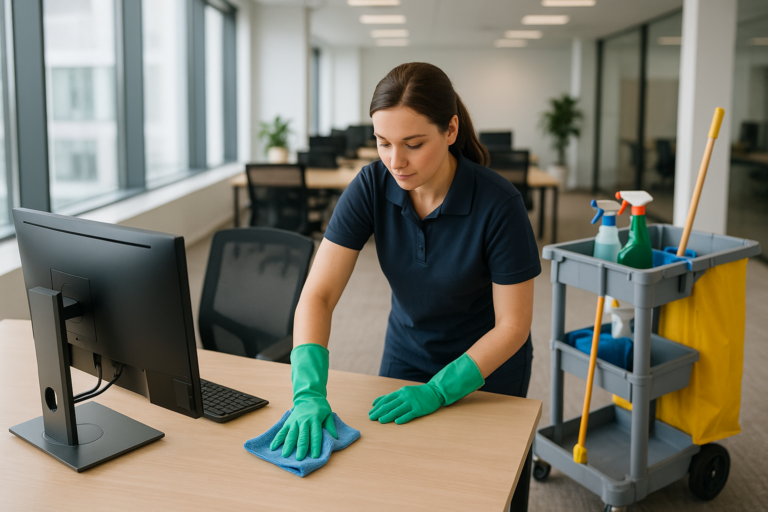
The single most effective habit during summer months is daily wiping of every high-touch surface in the break room. That means:
- Microwave door and interior panel
- Refrigerator handle and door edge
- Coffee maker handle and brew button
- Countertops and table surfaces
- Light switches and drawer pulls
- Sink faucet handles
Use an EPA-registered food-safe disinfectant — not just an all-purpose cleaner. Products certified under EPA List N (effective against common foodborne pathogens) are the professional standard. A cleaning company should be using commercial-grade disinfectants, not what you buy at Hannaford.
2. Weekly Refrigerator Cleanout Protocol
Shared refrigerators are a chronic problem in every workplace. In summer, forgotten food goes bad faster. A weekly protocol should include:
- Discard any items past expiration or clearly spoiled (with a posted notice to employees about the schedule)
- Wipe all interior shelves and bins with disinfectant spray
- Clean door gaskets — this is where mold hides
- Check the drip tray beneath the unit if accessible
This isn’t glamorous work, but it prevents the kind of smell that soaks into the room over a week of July heat. Employees notice. So do clients who walk through the space.
3. Coffee Station Deep Clean — More Often Than You Think
The office coffee station is one of the most contaminated surfaces in any break room. A 2011 NSF International study found coffee reservoirs and break room surfaces harbor mold and yeast in the majority of offices tested.
Weekly deep cleaning of the coffee station should include:
- Descaling or cleaning the coffee maker reservoir per the manufacturer’s instructions
- Washing the drip tray and any removable parts
- Wiping the counter area around the machine — coffee drips are sugar, and sugar attracts pests
- Disposing of opened coffee grounds stored at room temperature
In summer especially, the warm, moist environment inside a coffee maker is ideal for mold. Don’t skip this step.
4. Mop the Floor with a Food-Safe Disinfectant
Break room floors take a beating during summer. Employees come in from outside with sand, grass, and mud on their shoes (hello, Maine). Food spills happen. Ice cubes land on the floor and get kicked under the refrigerator.
At minimum, break room floors should be:
- Swept and mopped daily or every other day (not just weekly)
- Cleaned with a food-safe mop solution, especially around the refrigerator and sink areas
- Checked under appliances for buildup — this is where pest activity starts
In a professionally serviced building, the break room floor should never feel sticky. If it does, your cleaning service isn’t mopping with enough frequency or with the right product.
5. Trash and Recycling — Summer Odors Escalate Fast
This one is simple but often missed: in summer, trash cans need to be emptied more frequently.
Food waste decomposes faster in heat. A trash can that’s fine Monday at noon starts to smell by Tuesday morning in July. If your cleaning service only empties trash three times a week, that schedule needs to be revisited for June through August.
Best practices:
- Empty food waste trash bins daily during summer months
- Use liners every time — never leave a bare can
- Clean the inside of the can weekly with disinfectant spray
- Check the recycling area for food-contaminated containers (bottles, coffee cups) that are attracting fruit flies
What Clean Scene’s Break Room Protocol Includes
At Clean Scene, break rooms aren’t treated as an afterthought. Every service visit includes surface wipe-downs of high-touch areas, floor care, and trash removal. We use commercial-grade EPA-registered disinfectants — not store-bought sprays.
For clients who want a deeper level of service in summer, we can schedule weekly add-on visits specifically for break room and kitchen areas: refrigerator wipe-down, coffee station sanitizing, and a full floor mop. It’s the kind of add-on that pays for itself in fewer sick days.
If your current cleaning company treats the break room like an afterthought, that’s worth addressing. Request a free walkthrough and we’ll show you exactly what the standard looks like.
How Often Should Break Rooms Be Professionally Cleaned?
For most Maine offices, here’s a reasonable minimum schedule:
- Daily: High-touch surface wipe-down, trash removal, floor sweep
- Three times per week: Full floor mop
- Weekly: Refrigerator interior wipe-down, coffee station deep clean, trash can sanitizing
- Monthly: Under-appliance cleaning, grout scrub if applicable, full disinfectant reset
Higher-traffic environments — medical offices, daycares, restaurants — need daily full-service cleaning of the kitchen and break areas. The OSHA General Duty Clause requires employers to provide a workplace free from recognized hazards, and a contaminated break room qualifies.
The Bottom Line
Your employees spend a significant part of their day in the break room. A clean, sanitary kitchen area isn’t a luxury — it’s part of a professional workplace standard. In summer, the stakes are higher: higher temperatures, faster bacterial growth, and more foot traffic in and out.
If you’re not sure whether your current cleaning protocol is enough, get in touch with Clean Scene for a free commercial cleaning consultation. We’ll walk through your break room, assess what’s being missed, and put together a plan that keeps your team healthy through the rest of summer and beyond.
We’ve been serving Maine businesses from Bangor to Augusta since 2020 — and we know what a Maine summer does to a break room. Let us take that off your plate.