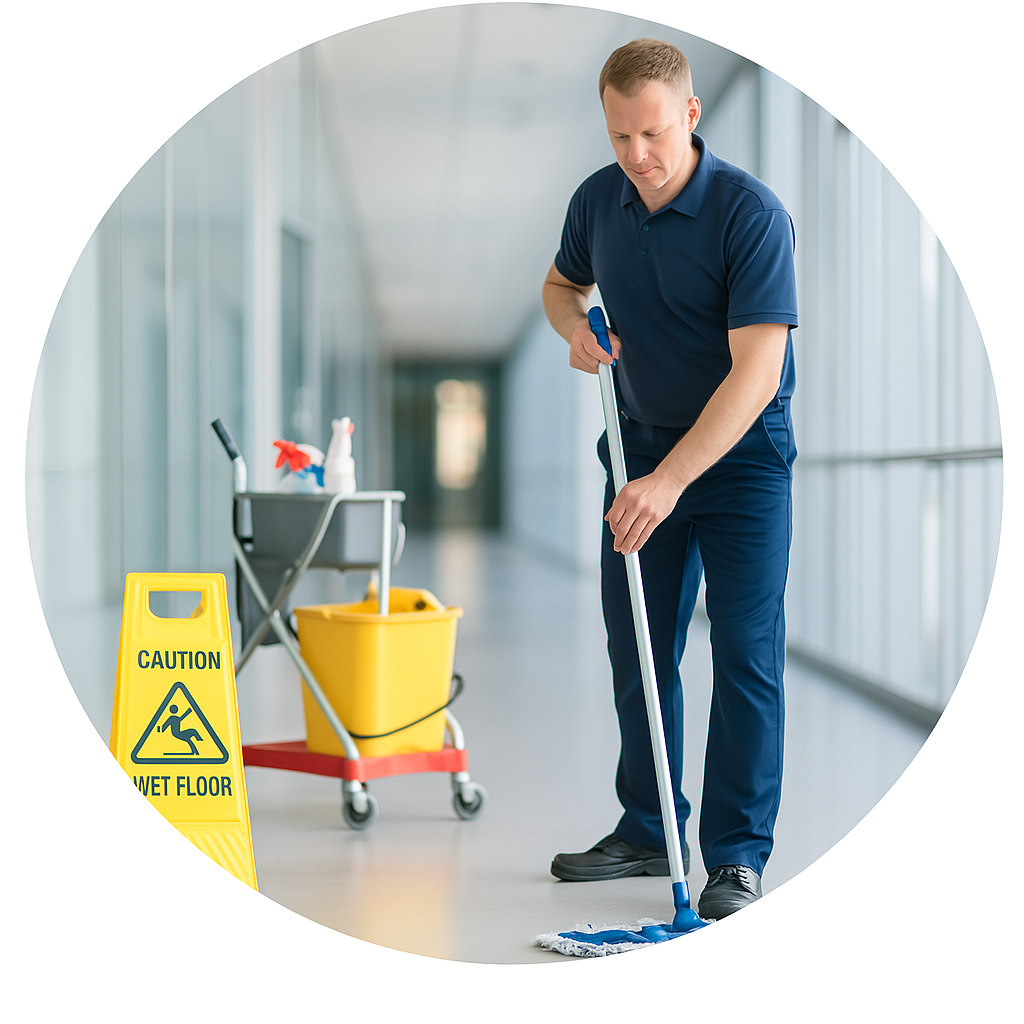
When Maine business owners think about commercial cleaning, the first thing that comes to mind is usually appearances — a clean lobby, spotless restrooms, floors that look presentable when clients walk in. Those things matter. But there’s a business case for professional cleaning that goes well beyond aesthetics, and most owners in Bangor, Brewer, and across central Maine don’t fully realize it until they see the numbers.
A cleaner workplace is a more productive workplace. That’s not a marketing line — it’s backed by research, and it shows up in the real-world performance of Maine businesses that take facility hygiene seriously.
Here’s what the connection actually looks like, and what it means for how you manage your facility heading into fall.
The Mess Tax: What Clutter and Dirt Cost You in Focus
A 2011 study published in the Journal of Neuroscience found that physical clutter in the visual field competes for attention, reducing working memory and increasing cognitive load. In plain terms: a messy workspace makes it harder to concentrate, even for people who think they work fine in chaos.
For Maine businesses — especially offices, professional services firms, and any space where focused work matters — this is a real cost. Every distraction your environment creates is time your team isn’t spending on billable work, client relationships, or execution.
Consistent professional cleaning removes the friction. Organized, clean surfaces support the kind of focused work that drives results. It’s one of the simplest changes a business owner can make that touches every employee, every day.
Sick Days Are the Most Expensive Kind of Downtime
Maine offices lose roughly 7–10 days per employee per year to illness on average. That’s a wide range — businesses with good hygiene practices trend toward the lower end, while those with inconsistent cleaning tend to cluster at the top.
The math isn’t complicated. In a 10-person office where the average cost of a sick day (lost output, coverage costs, disruption) runs $250–$400 per incident, reducing your team’s illness rate by even 20% can save thousands of dollars annually.
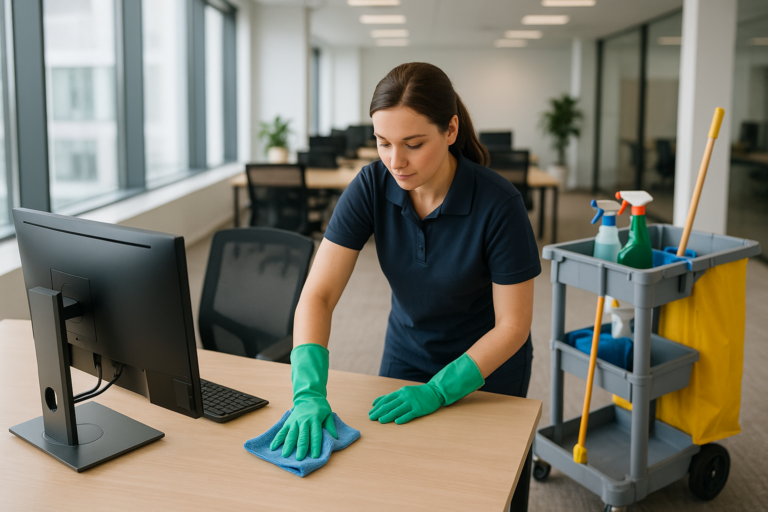
Commercial cleaning directly impacts this. High-touch surface disinfection — door handles, elevator buttons, shared keyboards, faucet handles, light switches, break room appliances — is the highest-leverage activity for reducing pathogen spread in a shared space. The CDC’s guidance on workplace hygiene is clear: frequent cleaning of contact surfaces is the most effective non-pharmaceutical intervention for reducing respiratory illness transmission.
As Maine heads into fall and cold season, this is the right time to evaluate whether your current cleaning contract actually includes daily touchpoint disinfection — or whether it’s still on a schedule designed for summer traffic levels.
What a Clean Environment Signals to Your Team
This part is harder to quantify, but experienced Maine business owners recognize it instantly: the condition of a workplace sends a signal to everyone who works there.
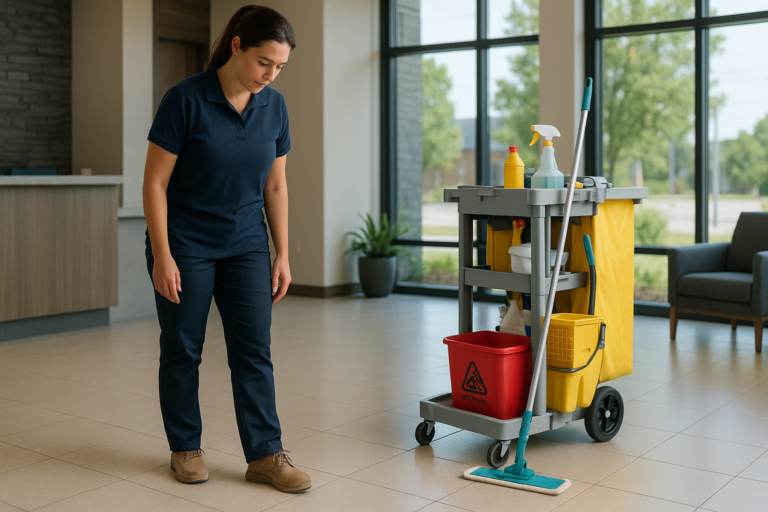
A consistently clean, well-maintained facility communicates that leadership takes care of the environment — and by extension, takes care of the people in it. It’s a baseline form of respect. When break rooms are cleaned properly, restrooms are stocked and sanitary, and floors aren’t tracked with grime from the parking lot, employees notice. When those things aren’t maintained, they notice that too — and it affects morale in ways that show up as disengagement, higher turnover, and the kind of low-grade frustration that’s hard to pinpoint but easy to feel.
In central Maine’s tight labor market, retention is one of the most expensive problems a business can face. Replacing an employee costs, on average, 50–200% of their annual salary when you account for recruiting, onboarding, and lost productivity. Facility quality isn’t the only retention lever, but it’s one of the few you can control completely and at a predictable cost.
First Impressions Still Close Deals in Maine
Maine’s business culture is relationship-driven. Word travels. Reputation matters. And nothing undercuts a professional reputation faster than walking a prospective client or partner through a facility that looks — or smells — like it hasn’t been cleaned properly in weeks.
This is especially true in professional services, healthcare-adjacent businesses, and any commercial space where clients visit in person. The condition of your facility is part of your pitch. It signals operational competence before anyone says a word.
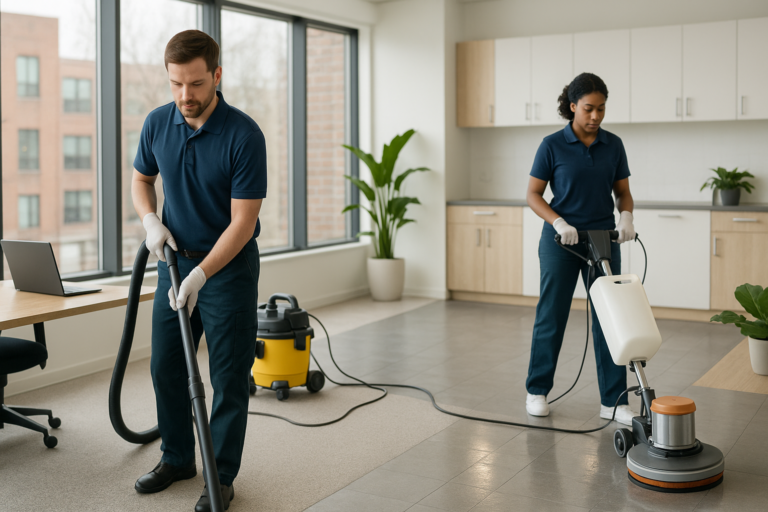
Clean Scene serves commercial properties in Bangor, Brewer, Orono, Hampden, and surrounding communities. We hear this consistently from clients who switched from an underperforming provider: within weeks of upgrading their cleaning service, they started getting unsolicited comments from clients and employees about how much better the space looked and felt. That’s not incidental — it’s what a professional standard of clean actually looks like.
The Right Frequency Matters — And It’s Probably Not Daily for Everyone
One of the most common conversations we have with Maine business owners is about frequency. Many are either over-cleaning (paying for daily service when 3x per week makes more sense for their traffic) or under-cleaning (running 1x/week on a space that generates enough daily mess to need more).
Getting the frequency right isn’t about cutting corners — it’s about matching the cleaning program to how your facility actually operates. A law office with 5 staff and minimal client traffic has different needs than a dental practice with 30 patient visits per day. A retail space in downtown Bangor during peak summer season needs more frequent attention than the same space in mid-October.
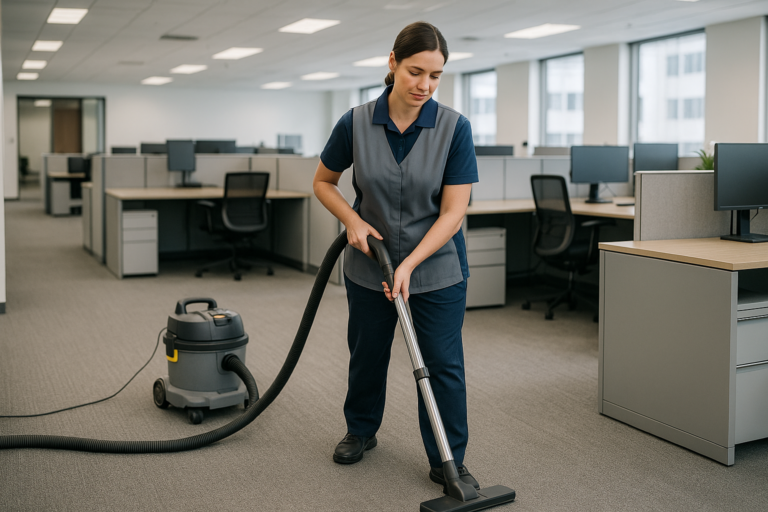
The right answer usually comes out of a walkthrough. We assess traffic patterns, surface types, restroom usage, and any specialized areas (kitchens, medical spaces, high-touch zones) to build a schedule that makes sense. It’s not about selling more hours — it’s about building a program that actually works for your operation.
If you haven’t had that conversation recently, or if your current program hasn’t been adjusted since you first signed a contract, now is the right time. Fall brings schedule changes across most Maine businesses, and it’s easier to adjust before the season shifts than after.
Putting It Together: What This Means for Your Facility Right Now
If you’re managing a commercial space in Maine and your cleaning program isn’t delivering on these fronts — lower absenteeism, better focus, positive impressions, a team that feels taken care of — something in the program isn’t right.
It could be frequency. It could be scope. It could be the provider. But the gap between a cleaning contract that checks a box and one that actually moves the needle on business performance is real, and it shows up in ways that go well beyond whether the floors are mopped.
Ready to talk about what that looks like for your facility? Get a free quote from Clean Scene — we serve businesses across the greater Bangor area with commercial cleaning programs built around how you actually operate. Or reach out directly if you have questions about your specific space.
A cleaner workplace isn’t an overhead expense. It’s an investment in the people and performance that drive your business.