If you run a business in Maine, you already know what late March and April bring. The snow starts to melt, the ground thaws, and suddenly every customer who walks through your door is tracking in a small piece of your parking lot. Welcome to mud season — and it’s anything but subtle.
For commercial property owners and office managers in the Bangor area, mud season isn’t just an annoyance. It’s weeks of accelerated wear on your floors, compounding costs, and a first impression problem every single day. Understanding what’s actually happening to your floors during this window — and how to respond — can save you thousands in premature replacement costs.
What Is Mud Season (and Why Does Maine Get It So Bad)?
Maine’s freeze-thaw cycle is more extreme than most of the country. When temperatures drop below freezing at night and climb above it during the day — which happens dozens of times in a typical Maine spring — the ground can’t drain properly. Water has nowhere to go, so it sits near the surface and turns topsoil into the thick, clingy mud that Mainers know intimately.
From roughly mid-March through mid-May, this cycle repeats daily. That means five to eight weeks of your employees, customers, and delivery people walking across wet, muddy surfaces before they ever hit your entryway mat — if you even have one.
What Mud Season Does to Your Business Floors
The damage isn’t just cosmetic. Here’s what’s actually happening at the floor level:
Carpet and Textile Flooring
Carpet takes the worst of it. Mud carries fine particulate matter — clay, sand, road salt residue, and organic material — that embeds deep in carpet fibers with every footstep. Once it dries, it becomes abrasive. Normal foot traffic then grinds those particles against the fiber base, cutting microscopic damage into the carpet structure. This is the primary cause of “traffic lane” graying that makes otherwise clean carpet look worn out.
Road salt, which gets tracked in throughout Maine’s winter and lingers well into spring, is hygroscopic — it attracts moisture, which keeps carpet damp longer and creates conditions for odor and mold growth if not addressed promptly.
Hard Floors: Tile, Vinyl, and Hardwood
Hard floors look like they’re holding up fine — until you check them under the right light. Grit from mud-soaked shoes acts like sandpaper on vinyl and hardwood finishes, dulling the surface over time. Commercial-grade luxury vinyl plank (LVP) that was installed to last 15–20 years can look hazy and scratched after just a few heavy mud seasons without proper maintenance.
Tile survives better, but grout lines are a different story. Mud fills porous grout quickly, and it stains. Once mud works its way into grout lines and dries, routine mopping pushes it deeper rather than extracting it. You end up with darkened grout that makes the whole floor look dirty even when it’s technically clean.
Hardwood is the most vulnerable. Moisture is hardwood’s enemy, and mud season brings both: the water trapped in mud and the residual moisture people track in on wet boots. Repeated exposure causes boards to swell, warp, and eventually cup at the edges.
The Hidden Cost of Ignoring Floor Maintenance in Spring
Replacing commercial carpet in a 2,000 sq. ft. office costs $8,000–$18,000 installed. Refinishing hardwood in a retail space runs $3–$8 per square foot. These aren’t hypothetical numbers — they’re what Maine business owners pay when years of deferred floor maintenance catch up at once.
The seasonal spike in floor damage during mud season means the maintenance decisions you make in April have outsized impact. A few weeks of increased attention can extend your floor life by years. A few weeks of neglect can do the opposite.
5 Ways to Fight Mud Season Floor Damage
1. Deploy Commercial-Grade Entrance Mats (Plural)
One mat at the door isn’t enough. The EPA recommends a minimum of 6–10 feet of mat coverage at building entrances to capture the dirt, moisture, and particulate that people carry in. That usually means a scraper mat outside, an absorbent mat at the threshold, and a secondary mat inside.
Consumer-grade mats sold at big box stores compress quickly under commercial traffic and stop working within a week. Commercial mats — the kind that can be laundered or replaced weekly — are worth the investment during peak mud season.
2. Increase Cleaning Frequency
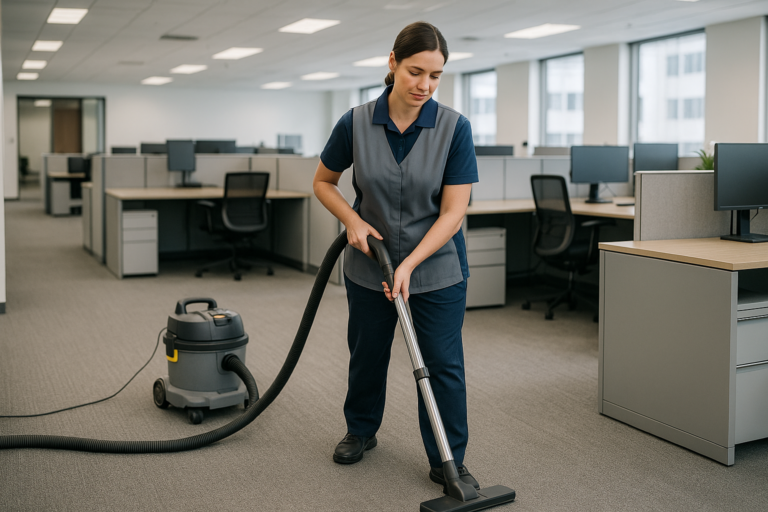
If your current cleaning contract calls for nightly vacuuming, mud season is the time to add midday touch-ups in high-traffic areas. Dry vacuuming before mopping is critical: mopping over dry grit turns it into an abrasive slurry and pushes it deeper into fibers and grout. The sequence matters: vacuum or dry-sweep first, every time.
At Clean Scene, we adjust client schedules during spring to account for the increase in tracked-in material. It’s part of what a responsive cleaning company should be doing automatically.
3. Switch to a Wet Mopping Schedule That Works With Maine’s Climate
Standard mop-and-bucket approaches leave too much water on the floor — water that takes time to evaporate and invites more tracked-in dirt before the floor fully dries. Microfiber flat mops used damp (not soaking) dry faster and capture particulate rather than redistributing it.
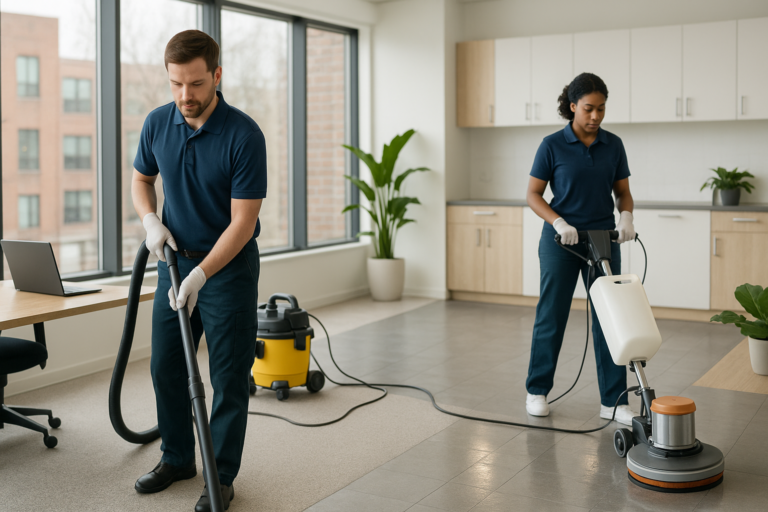
For grout-heavy tile floors, a low-moisture scrubbing machine does in one pass what a mop can’t do in ten. If your cleaning company isn’t using the right equipment for your floor type during this season, that’s worth a conversation.
4. Protect High-Traffic Pathways Temporarily
Consider temporary floor protection film on wood or LVP in the heaviest-traffic corridors during peak mud weeks. It’s not glamorous, but it’s far cheaper than refinishing. Peel-and-stick floor film is designed for exactly this: construction traffic, trade shows, and seasonal spikes in wear. It goes down in an hour and peels off clean.
Alternatively, rubber-backed runner rugs along main corridors create a sacrificial layer that’s easy to swap and clean.
5. Schedule a Deep Clean at the End of Mud Season
Once mud season breaks — usually mid-May in central Maine — schedule a comprehensive floor cleaning before the residual damage sets in. For carpet, that means hot water extraction. For hard floors, it means pH-neutral deep scrubbing and, where needed, re-sealing grout.
Think of it like a post-winter mechanical checkup. You service your equipment after it’s been stressed. Your floors deserve the same.
How Clean Scene Handles This Season
We’ve been cleaning commercial facilities in the Bangor area for six years. Every spring, we see the same pattern: businesses that take mud season seriously come out of it with floors that look another year or two younger. Businesses that don’t come to us in May asking what happened.
Our spring floor protocols include adjusted vacuuming sequences, moisture management mop techniques, and proactive mat program recommendations. We’re not just coming in and going through the motions — we know what this season costs and we work to limit it.
If you’re not sure whether your current cleaning routine is holding up against mud season, it probably isn’t. The floor wear will catch up eventually.
Ready to take mud season seriously? Get a free walkthrough and quote — we’ll tell you exactly what your floors are facing and how to protect them.
Have questions before you commit? Contact us directly — no pressure, no sales pitch, just straight answers.